The first real warm weekend of spring always brings the same scene around here: a homeowner dragging out a ladder, spotting a loose gutter spike, and then noticing the stain on the soffit that definitely wasn't there in October. By the time the snowbanks are gone in Rockland and Orange County, winter has usually left behind more than people think. What looked fine in December can turn into a roof leak, wet basement corner, or rotted trim board by April.
After more than 20 years working on homes from Nyack to Middletown, I've learned that spring isn't just cleanup season - it's damage control season. In my own schedule, easily 7 out of 10 spring service calls trace back to water not moving where it should. Sometimes it's a clogged gutter. Sometimes it's bad grading. Sometimes it's a tiny crack in masonry that opened up after a dozen freeze-thaw cycles. The point is, small problems don't stay small for long once spring rain gets involved.
A solid spring maintenance plan doesn't have to eat up every weekend, and it doesn't have to turn into a full renovation. What it does need is the right order, a sharp eye, and a little honesty about what you can safely handle yourself. This checklist is the same kind of advice I'd give a homeowner standing next to me in the driveway, coffee in hand, asking where to start before the next storm rolls through.
Start Outside: Roof, Gutters, Siding, and Drainage
Spring maintenance always starts outside because that's where winter does most of its dirty work. Before you buy mulch or think about power washing, walk the whole perimeter of the house slowly. Look for shingles on the lawn, bent gutter sections, splash marks on siding, and any soil that washed away near the foundation. Bring a pair of binoculars so you don't talk yourself into climbing onto a roof you shouldn't be on.
Check the roof and flashing first
Look at roof valleys, pipe boots, chimney flashing, and the lower edge above gutters. On asphalt shingle roofs, missing granules, lifted tabs, and exposed nail heads are early warning signs. I see a lot of architectural shingles like GAF Timberline or CertainTeed Landmark around Rockland County, and both hold up well, but even a good roof can fail at flashing long before the shingles wear out. Pay close attention to chimney counterflashing and any rubber vent boots that have split from UV exposure. A bead of roof cement isn't a long-term repair there; the boot usually needs replacement.
Clean gutters and make sure water exits well away from the house
Gutters should be pitched roughly 1/4 inch for every 10 feet toward the downspout. Anything flatter tends to hold debris and overflow during hard spring rain. Scoop out the compacted leaf sludge by hand or with a gutter scoop, flush each run with a hose, and test every downspout. I like to see water discharge at least 6 feet from the foundation using a solid extension, not one of those flimsy accordion pieces that crack by July. While you're there, tighten hidden hangers, replace loose spikes, and check fascia boards with an awl or screwdriver. Soft wood means you've got a moisture problem that needs more than paint.
Inspect siding, trim, and the grade around the home
Walk the sunny side and the shaded side separately, because they age differently. On vinyl siding, look for pieces that unlocked in wind. On wood trim, press the lower corners near windows and garage doors where rot starts first. Seal small exterior gaps with OSI Quad Max or Big Stretch, not cheap painter's caulk that fails after one season. At the ground level, the soil should slope away from the house about 6 inches over the first 10 feet. That one detail alone can save a basement. If mulch is piled against siding or covering weep screeds, pull it back so the bottom edge can dry out.
Don't skip decks, steps, railings, and walkways
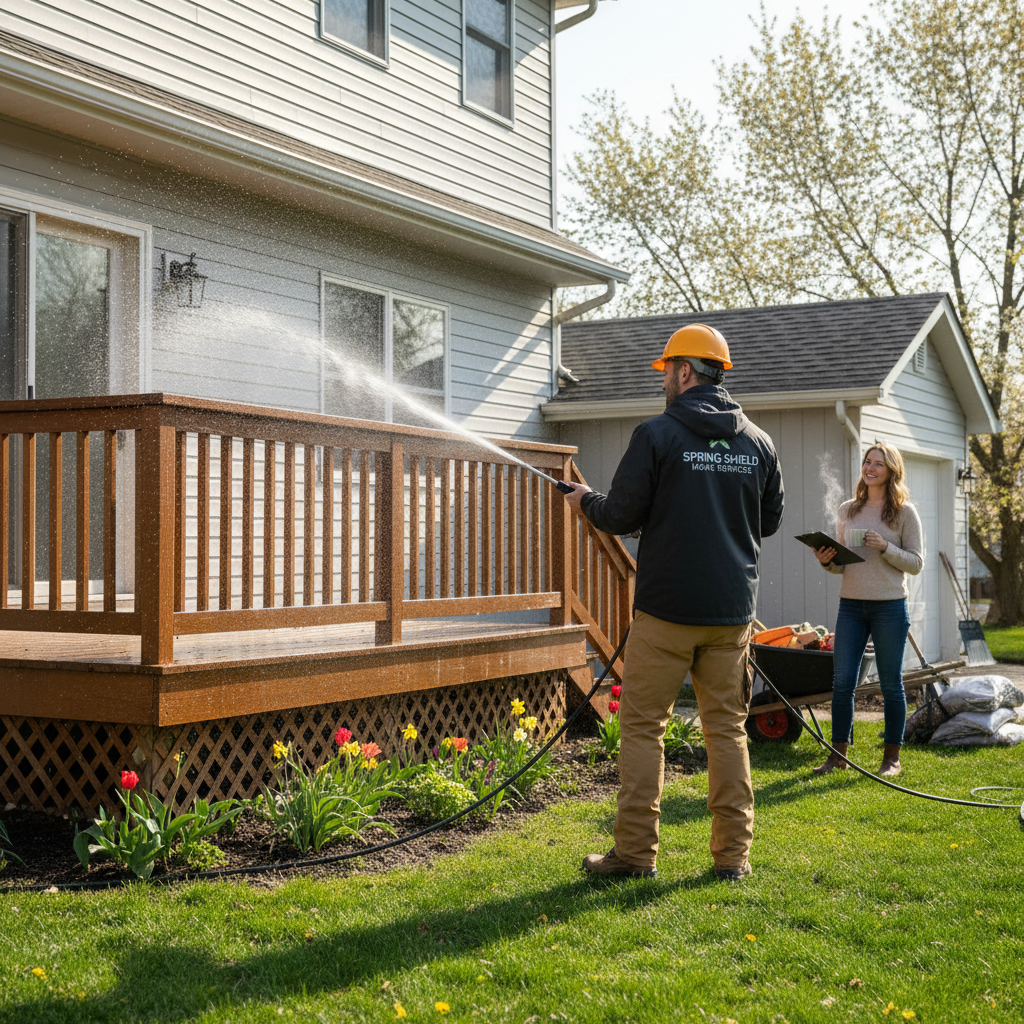
This is where a lot of spring injuries happen. Probe deck posts at the base, tighten loose rail bolts, and check stair stringers for splitting. On older pressure-treated decks, wash with a wood cleaner like Wolman DeckBrite or Benjamin Moore Restore, let it dry properly, then apply a quality penetrating stain instead of a thick film coating that peels. Also look at walkway pavers and bluestone for heaving after freeze-thaw movement. A 1/2-inch lip may not look like much, but it's enough to trip someone carrying groceries.
Run a garden hose into each gutter section for two full minutes after cleaning. You'll spot hidden leaks at seams and see right away whether the downspout is backing up underground.
Homeowners often clean the gutter but forget the outlet elbow and underground drain. The gutter looks clear, but the water still dumps at the foundation during the first heavy rain.
Move Inside: Basement, Plumbing, HVAC, and Interior Systems
Once the exterior is checked, head inside before spring humidity starts masking problems. The basement or crawl space tells the truth about how your house handled winter. A dry-looking corner can still show efflorescence, peeling paint, or that musty smell that means moisture moved through the wall. I always tell homeowners to trust their nose as much as their eyes down there.
Start in the basement or lowest level
Look along the foundation wall for hairline cracks, rust marks under the sill plate, and white mineral deposits. A narrow shrinkage crack may only need monitoring, but anything that changed width over winter deserves attention. Test the sump pump by pouring in 5 gallons of water and making sure the float kicks on promptly and discharges outside, not back into the footing area. For minor utility penetrations, seal gaps with hydraulic cement like DRYLOK Fast Plug or use Great Stuff Pestblock around non-heat-producing lines where appropriate. Just don't foam over active leaks and call it fixed.
Check plumbing before a pinhole leak becomes a wall repair
Inspect shutoff valves under sinks, the washing machine hoses, hose bibs, and the ceiling below bathrooms. Winter is rough on older copper joints and outdoor spigots. Turn on every exterior hose bib and make sure the shutoff actually stops water inside if you have one. Replace rubber washing machine hoses older than 5 years with braided stainless lines, and look at the water heater for corrosion around the draft hood, pressure relief valve, and base. A slow leak at the top of the tank can drip for weeks before it shows up on the floor.
Service the HVAC and anything that moves air
Before you need cooling, replace the furnace or air handler filter with the correct size and a reasonable rating - usually MERV 8 to MERV 11 unless your system is designed for more resistance. I've seen too many systems struggle because someone shoved in the highest-rated filter they could find. Clean the outdoor condenser coils gently from the inside out, trim vegetation back at least 24 inches, and make sure the pad is still level after winter frost movement. Add condensate tablets like RectorSeal to the drain pan and confirm the condensate line flows freely so you don't end up with a surprise ceiling stain in June.
Finish with windows, doors, and safety items
Open and close every window. Screens get torn over winter, balances fail, and wood sashes swell from moisture. Re-caulk exterior window joints with a quality sealant and replace cracked glazing where needed. Then test smoke alarms and carbon monoxide detectors, replace batteries if required, and check extinguisher gauges. Spring maintenance isn't just about preserving the house - it's about making sure everything works when you need it.
Use a cheap moisture meter on basement rim joists and around suspect trim. Readings consistently above 15% in spring usually mean you still have an active moisture source to solve.
A lot of homeowners run the AC on the first warm day without cleaning the condenser or checking the drain line. That's a quick way to stress the system and create a water leak indoors.
Common Mistakes to Avoid
The biggest mistake I see every spring is treating symptoms instead of following the water. People repaint a stained ceiling, patch a drywall crack, or slap caulk over rotten trim without fixing the failed flashing, bad gutter pitch, or negative grade outside. It looks better for a month, then the next storm puts them right back where they started.
Skipping the boring stuff
Homeowners naturally want to tackle what they can see from the driveway, like pollen, siding stains, or a tired front step. The boring checks - sump pumps, downspout extensions, attic ventilation, dryer vent cleaning - are the ones that prevent the expensive calls. A clogged dryer vent can become a fire hazard, and a disconnected bath fan duct can dump moisture into the attic all spring.
Using the wrong products in the wrong place
Interior painter's caulk on exterior trim, expanding foam against hot venting, deck stain over damp wood, and pressure washers set too aggressively on siding are all common spring problems. On vinyl siding, too much pressure can drive water behind the panels. On wood decks, sealing before moisture content drops enough traps water in the boards and leads to peeling. Good materials matter, but the right application matters more.
Getting on ladders or roofs when the conditions are wrong
Early spring mornings in the Hudson Valley can still be slick. Moss, wet shingles, and soft ground make ladders risky fast. I tell people all the time: there's no medal for cleaning a second-story gutter yourself. Binoculars, a drone, or a pro inspection cost a whole lot less than an urgent care visit.
Waiting until late spring to book help
The minute warm weather hits, everyone's schedule fills up - roofers, gutter crews, HVAC techs, handymen, everybody. The homeowners who call in March usually get preventative work done. The ones who wait until May are often calling because the first heavy rain already found the weak spot.
Make one pass around the house with a notepad and mark every issue by priority: water, safety, mechanical, then cosmetic. That keeps you from spending money on paint before fixing the leak behind it.
Bundle small exterior jobs into one service visit - gutter tune-up, downspout extension, caulk touch-ups, and loose trim repair. Paying one trip charge is usually cheaper than calling four separate times.
Cost Breakdown: What to Expect
Spring maintenance costs depend on height, access, age of the home, and whether you're doing true maintenance or uncovering deferred repairs. In Rockland County, handyman and small contractor labor commonly runs about $95 to $150 per hour depending on the trade and insurance requirements. In Orange County, you'll often see $85 to $140 per hour, with specialty HVAC, electrical, or roofing work landing higher.
Typical DIY costs
A basic DIY spring check might cost $150 to $500 if you already own a ladder and hand tools. Figure about $20 to $45 for a quality exterior sealant, $25 to $60 for a furnace filter, $30 to $80 for a moisture meter, $40 to $120 for downspout extensions and splash blocks, and $35 to $90 for cleaners like Simple Green Oxy Solve, Wet & Forget, or deck wash products. DIY makes sense for filter changes, simple caulking, light cleaning, and ground-level inspection - not for steep roofs, electrical diagnosis, or anything involving structural repair.
Typical professional costs in Rockland and Orange County
Gutter cleaning on a one-story home usually runs $200 to $350; two-story homes are often $300 to $450 or more with difficult access. A roof tune-up with minor shingle or flashing repairs may run $350 to $900. Dryer vent cleaning generally falls between $150 and $275. HVAC spring service is often $175 to $325 per system. Minor exterior carpentry repairs, like replacing a few feet of fascia or trim, can land between $300 and $1,200 depending on material and paint needs. Regrading a problem area near the foundation might cost $600 to $2,500 depending on access, fill needed, and drainage correction.
Where the real money goes when maintenance gets delayed
This is the part homeowners hate hearing, but it's the truth. A $250 gutter issue can become a $2,500 foundation water problem. A $20 washer hose can become a $6,000 flooring and drywall insurance claim. A neglected deck railing repair can turn into a liability problem no one wants. Spring maintenance isn't cheap in the moment, but repair work after water intrusion is almost always worse.
Best way to budget it
For most single-family homes in this area, I tell homeowners to plan on roughly 1% to 3% of the home's value annually for ongoing maintenance, with spring taking a meaningful chunk because it exposes winter damage. If money is tight, handle the water-management items first: roof leaks, gutters, downspouts, grading, sump pump, and exterior caulking. Cosmetics can wait a few weeks. Water never does.
Ask for a spring maintenance punch list price instead of separate estimates for five tiny jobs. Many local contractors will discount labor when they can knock everything out in one visit.
Take dated photos of roof edges, basement walls, and problem corners each spring. Comparing year to year helps catch movement early and can save money by proving a small issue is getting worse before it becomes a major repair.
📍 How This Applies to Homes in Rockland & Orange County
Spring home maintenance hits differently in the Hudson Valley than it does in milder parts of the country. Here in Rockland County and Orange County, the combination of harsh winters, freeze-thaw cycles, spring moisture, and then summer humidity puts real stress on houses. Water gets into tiny cracks in January, expands, and by April you've got loose masonry, lifted flashing, separated caulk joints, or a damp basement wall that wasn't obvious before the thaw.
A lot of homes in places like Nyack, Suffern, New City, and Newburgh were built before 1970, and older houses have their own spring checklist. I see original wood trim, aging mortar joints, stone or block foundation walls, and older drainage layouts that were never designed for today's heavier rain events. In Spring Valley and Nanuet, it's common to find settled walkways, older leaders tied into questionable underground drains, and additions where the grading was never corrected properly after the work was done.
Orange County homes in Middletown and Newburgh often deal with a little more spread-out property drainage, longer downspout runs, and more varied foundation conditions, while tighter lots in parts of Rockland make water management more concentrated around the home. Either way, spring is the time to see where roof water is actually landing, whether window trim is holding paint, and whether the basement is staying dry after a two-day rain. That's especially true after a winter with repeated thaw-freeze swings, because those cycles loosen everything from pavers to porch steps.
Then comes the handoff from wet spring to sticky summer. A small moisture issue in April turns into musty air, swollen trim, mold growth, or an overworked AC system by July. That's why spring home maintenance in Rockland County isn't just seasonal housekeeping - it's the best shot you've got to get ahead of the climate we live with here every year.
Frequently Asked Questions
Ready to Get Started?
Get Your Free Estimate Today
Serving Rockland County & Orange County, NY. Professional results, guaranteed.
Request a Free Estimate →