By the time the leaves really start piling up in New City, Middletown, and along the back roads near Warwick, I start getting the same phone calls every year: water spilling over clogged gutters, a furnace that won't kick on, and drafty bedrooms that felt fine in September but turn icy by Thanksgiving. The trouble is, most of those problems didn't start in winter. They started in fall, when a small maintenance issue got ignored for just a little too long.
Around here in Rockland and Orange County, the homes take a beating. We get heavy leaf drop, cold nights that sneak up fast, and that first freeze-thaw cycle that finds every loose shingle, every hairline crack in masonry, and every gap around an old window frame. I've worked on plenty of homes where a $20 tube of sealant and an hour on a ladder in October would've prevented a $2,000 ceiling repair in January.
A lot of Hudson Valley homes were built before modern insulation standards, and it shows once the temperatures dip. Older ranches in Nanuet, colonials in Nyack, capes in Newburgh, and split-levels in Spring Valley all have their own weak spots. This checklist is the same one I'd walk through with a homeowner on a real service visit, so you can get ahead of winter instead of reacting to it.
Start Outside: Roof, Gutters, and Drainage
The outside of the house is where I tell people to start, because once snow and ice show up, even a small issue gets harder and more expensive to deal with. Walk the perimeter first. Look for missing or lifted shingles, bent flashing, sagging gutters, loose downspouts, and any place where soil has settled against the foundation. I like to see downspouts discharge at least 6 feet away from the house, either through a solid extension or a buried drain line. Anything shorter, and you're asking for basement seepage once snow starts melting.
Clean and test the gutter system
Gutters should be cleaned after most of the leaves are down, not too early. In Orange County and Rockland, that usually means late October through mid-November depending on the trees around the house. Flush each run with a garden hose and make sure water moves toward the downspout without standing. I check for pitch at roughly 1/4 inch for every 10 feet of gutter. If you've got seams that drip, a quality gutter sealant like Geocel 2320 usually holds up better than cheap caulk from the big box shelf.
Check the roof edge and attic signs
You don't always need to get on the roof to spot trouble. Use binoculars from the ground and look for dark shingle patches, popped nails, exposed fasteners on ridge vents, or flashing pulling away near chimneys and plumbing stacks. Inside the attic, bring a flashlight on a sunny day. Any pinhole light coming through is a red flag. I also look for dark staining on roof sheathing, damp insulation, or rusty nail tips, which tell me moisture has been hanging around longer than the homeowner realized.
Handle drainage before the ground freezes
One of the most overlooked jobs is regrading low spots near the foundation. You want the soil to slope away from the house about 6 inches over the first 10 feet. Add compacted fill, not loose mulch, and keep flower beds from trapping water against siding. While you're at it, inspect foundation vents, bulkhead doors, and exterior hose bibs. Install insulated faucet covers, disconnect hoses, and shut off interior supply valves if your plumbing layout allows it. A frozen sillcock is one of those simple problems that turns into drywall and plumbing work fast.
Before you wrap up outside, trim branches back at least 6 to 10 feet from the roof where possible, especially over asphalt shingles. Branches scrape granules off during windy storms and dump extra debris into valleys and gutters. I also recommend checking caulk at window and door trim joints with a high-quality exterior sealant like OSI Quad Max or Sherwin-Williams Sher-Max. Tiny cracks around trim boards don't look like much in October, but once winter wind gets into them, you'll feel it in the room behind the wall.
After cleaning gutters, run water from the farthest end for a full two minutes. A system that drains fine with a quick hose burst can still back up when a real storm dumps water fast.
Homeowners often install short corrugated downspout extensions that stop 2 or 3 feet from the foundation. That still leaves too much water near the house during snowmelt.
Protect Plumbing, HVAC, and Insulation
Once the exterior is squared away, move inside and focus on the systems that keep the house safe and comfortable. The furnace, water lines, insulation, and air sealing all work together. I can't tell you how many times I've seen a perfectly good heating system blamed for a cold house, when the real issue was attic air leakage and poor insulation around kneewalls or rim joists.
Service the heating system before the first cold snap
For forced-air systems, replace the filter with the correct size and MERV rating, usually MERV 8 to 11 for most homes unless your equipment calls for something specific. Check supply vents and return grills so they're not blocked by furniture or rugs. If you have baseboard heat, bleed trapped air where needed and make sure the fins are clean. A proper furnace tune-up should include combustion testing, burner cleaning, checking the flue pipe, inspecting the blower motor, and verifying temperature rise across the heat exchanger. For many homes, that temperature rise should land within the manufacturer's listed range, often around 35 to 65 degrees Fahrenheit.
Stop drafts where they actually start
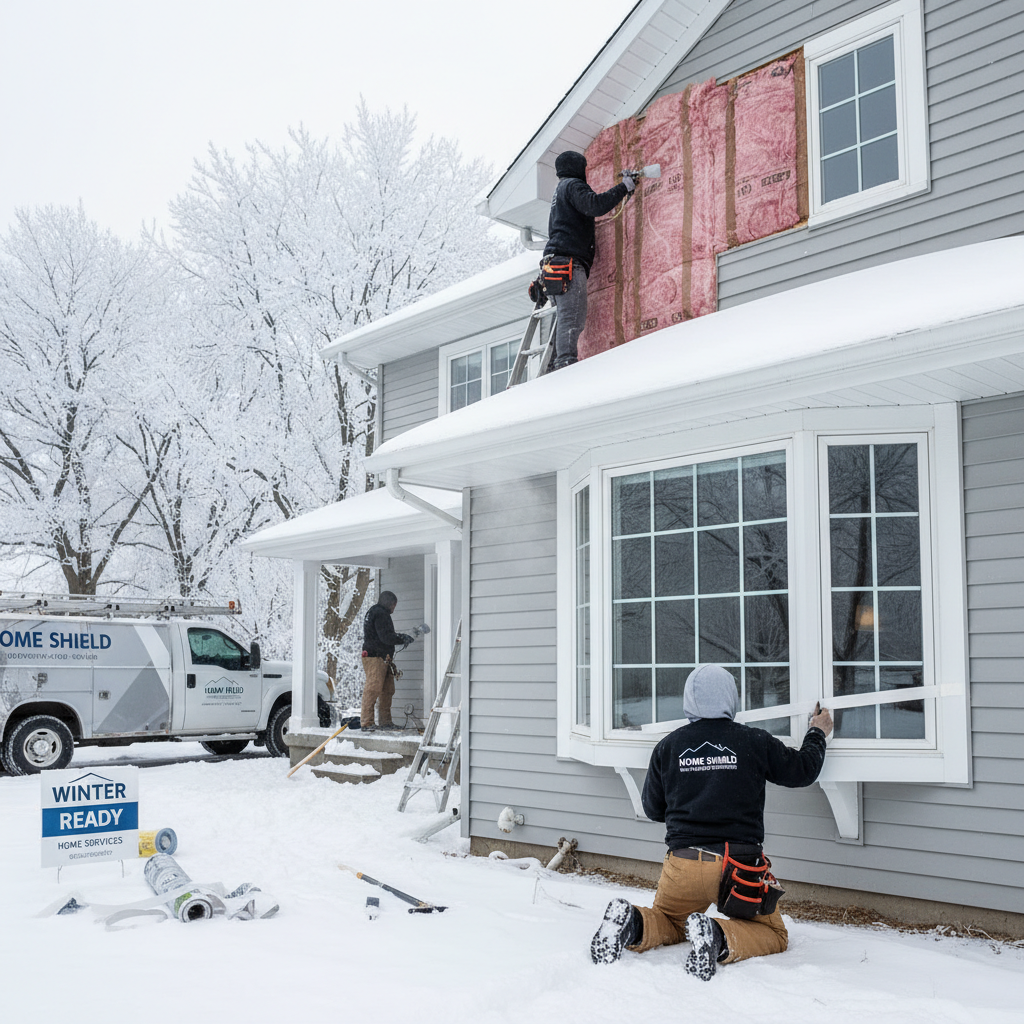
Weatherstripping old doors helps, but the biggest heat loss in a lot of older homes happens up high. Pull back attic insulation carefully and seal penetrations around plumbing stacks, electrical runs, bath fan housings, and recessed lights with fire-rated foam or high-temp sealant where appropriate. Then bring insulation back over the top. In our area, I like attic insulation levels close to R-49 for best performance, though many older homes are far below that. For accessible attic hatches, install rigid foam board on the back of the hatch and add adhesive-backed gasket material around the trim.
Protect pipes and moisture-prone areas
Any water line running through an unheated crawl space, garage wall, or exterior cabinet should be insulated with foam sleeves sized correctly to the pipe diameter, usually 1/2 inch or 3/4 inch. I often use Frost King or K-Flex insulation and tape the seams so cold air can't sneak in. Don't forget basement windows, crawl space vents, and the sill plate area. Those are weak points in a lot of pre-1970s homes. While you're there, test the sump pump by pouring in a 5-gallon bucket of water and confirming the float switch activates smoothly.
The last indoor job I push every fall is safety. Replace smoke detector and carbon monoxide detector batteries, test the units, and check manufacture dates. CO detectors especially matter once the boiler, furnace, or fireplace starts running daily. If you've got a masonry fireplace, inspect the damper and firebrick joints, and make sure the chimney cap is secure. A little maintenance here keeps winter from turning into an emergency call at the worst possible time.
Use an incense stick or a smoke pen on a windy day to find real air leaks around attic hatches, basement rim joists, and window trim. You'd be surprised how often drafts come from above or below the room, not the window itself.
A lot of homeowners swap in the highest-MERV filter they can find, thinking it's better. On older systems, an overly restrictive filter can reduce airflow and make the furnace work harder.
Common Mistakes to Avoid
The biggest mistake I see is waiting for a warm day in late November that never comes. Fall maintenance in this part of New York has a pretty short window. Once nights start dropping below freezing, sealants cure slower, hoses need to be disconnected, and roof work gets riskier. The homeowners who stay ahead of winter are the ones who start inspecting in early to mid-October and finish up before Thanksgiving.
Another common mistake is treating every crack or draft with the same material. Exterior gaps around siding trim, masonry joints, and window casings need products designed for movement and weather exposure. Interior air leaks in attics or basement penetrations often need foam, gasket material, or fire-rated products depending on location. Slapping painter's caulk on everything might look neat for a month, but it won't hold up through a Hudson Valley winter.
I also see people focus on what they can see and ignore what they can't. They'll clean the gutters but never check whether the downspout is actually discharging far enough away. They'll replace a drafty door sweep but never look in the attic for missing insulation. They'll cover the outdoor faucet but forget to shut off the line from inside. Fall maintenance works best when you think in systems: roof sheds water, gutters move it away, grading keeps it away, insulation holds heat, and air sealing stops drafts.
One more mistake: putting off small repairs because the house made it through last winter. That's not much of a test. One harsh freeze-thaw cycle can open up a small mortar crack, and one ice dam can turn a minor roof issue into interior water damage. I tell homeowners all the time, houses rarely fail all at once. They fail one ignored detail at a time.
Make a punch list by area: roofline, foundation, heating, plumbing, attic, and safety devices. Finish one zone completely before moving to the next so nothing gets missed.
Bundle work into one weekend or one service visit. Having gutters cleaned, minor roof repairs handled, and exterior caulking done at the same time often costs less than separate call-outs.
Cost Breakdown: What to Expect
Costs for fall maintenance vary by house size, roof height, and how much deferred maintenance has piled up. For DIY work, expect to spend about $150 to $400 on basics like furnace filters, foam pipe insulation, faucet covers, weatherstripping, exterior sealant, a tube or two of roofing cement, and gutter supplies. If you need a decent extension ladder, harness gear, or a wet/dry gutter attachment, that number goes up fast, which is why some homeowners are better off hiring out the higher-risk jobs.
In Rockland and Orange County, handyman and maintenance labor rates commonly run around $95 to $150 per hour depending on the trade, the complexity, and whether ladder work or roof access is involved. A standard gutter cleaning on a one-story home might run $150 to $250, while a two-story home with heavy leaf buildup can land in the $250 to $450 range. Minor gutter resecuring or sealing may add $100 to $300. Small roof repairs like replacing a few shingles, resealing a vent boot, or addressing exposed flashing often start around $250 and can range to $750 or more depending on access and materials.
HVAC service is its own category. A furnace or boiler tune-up in this market typically runs about $175 to $350. Air sealing and insulation upgrades range wider: a simple attic hatch weatherstrip and foam board fix could be under $100 in materials if you do it yourself, while professional attic air sealing and insulation improvements can run from $800 to $3,000 or more depending on square footage. Pipe insulation and hose bib winterization are usually inexpensive, often $25 to $75 in DIY materials, or $125 to $300 when bundled into a service call.
What surprises homeowners most is how cheap prevention usually is compared to repairs. A clogged gutter cleanup is a couple hundred bucks. Interior ceiling repair from an ice dam leak can hit $1,000 to $3,500 once drywall, paint, and stain treatment are involved. Replacing a burst pipe section and patching the wall can easily run $500 to $2,000 depending on where it happened. Spending a little in fall is almost always the cheaper move.
Ask whether the contractor offers a fall maintenance package. Bundled pricing for gutter cleaning, hose bib winterization, filter replacement, and exterior inspection usually beats booking each task separately.
Keep a simple yearly log of what was serviced, sealed, or repaired. When you track dates and products used, it's much easier to catch repeat problem areas before they become major repairs.
📍 How This Applies to Homes in Rockland & Orange County
Fall maintenance matters everywhere, but it matters a little more in the Hudson Valley because our houses go through real seasonal swings. We get summer humidity that swells trim and feeds mildew in basements, then fall cool-downs that expose air leaks, followed by harsh winters and repeated freeze-thaw cycles that stress roofs, masonry, and foundations. By spring, all that trapped moisture shows up as peeling paint, musty crawl spaces, and water stains that seemed to come out of nowhere.
A lot of homes in Rockland County and Orange County were built before the 1970s, especially in places like Nanuet, Spring Valley, Suffern, Nyack, New City, Middletown, and Newburgh. Those older homes often have under-insulated attics, original or aging wood trim, basement moisture issues, and retrofitted heating systems that don't always move air or heat evenly. That's why a generic checklist doesn't always cut it here. You need to look at the actual weak points common to older Hudson Valley housing stock.
I've seen ranch homes in New City with low-slope rear roof sections that hold wet leaves, colonials in Nyack with clogged gutters dumping water right onto stone foundations, and older capes in Middletown with pipes running through barely insulated knee walls. In Newburgh and Spring Valley, I've worked on plenty of homes where summer humidity led to attic mold concerns, then winter made those same ventilation issues worse. The seasons are connected around here, so what you ignore in one season usually shows up as damage in the next.
For homeowners looking up fall home maintenance Orange County NY advice, the biggest local takeaway is this: don't wait for visible damage. In our climate, by the time you see a stain, a crack, or a draft, the underlying issue has usually been brewing through several seasons. A good fall routine protects your home not just from snow and ice, but from the full cycle of Hudson Valley weather.
Frequently Asked Questions
Ready to Get Started?
Get Your Free Estimate Today
Serving Rockland County & Orange County, NY. Professional results, guaranteed.
Request a Free Estimate →