Seasonal Home Maintenance Hudson Valley NY: The Year-Round Checklist That Saves You Big Repairs
A practical season-by-season maintenance plan from a local contractor who’s seen what Hudson Valley weather does to homes.
Late March in the Hudson Valley has a way of exposing every little thing your house kept hidden all winter. The snow pulls back in patches, the sump pump starts cycling, and suddenly there’s a brown stain at the edge of the ceiling or a damp line creeping across the basement wall. I’ve walked into houses in New City, Nyack, and Middletown where everything seemed fine in February, then one hard thaw followed by a cold snap opened up leaks, loosened gutters, and turned a small crack into a real repair.
A lot of homeowners think maintenance means fixing whatever’s obvious when it breaks. Around here, that gets expensive fast. Water damage and freezing-related issues make up a huge share of homeowner insurance claims nationally, and in the Hudson Valley I’d say the biggest culprit is timing. Folks wait until summer to look at what winter already beat up, or they head into December without handling the little things that keep pipes, roofs, and heating systems from giving out when the temperature drops.
The good news is most of this stuff isn’t complicated when you tackle it in the right season. A solid seasonal home maintenance Hudson Valley NY checklist keeps small jobs small. It protects older siding, keeps basements drier, helps furnaces run cleaner, and catches the kind of wear we see all the time in Rockland and Orange County. What follows is the same year-round system I’ve recommended to homeowners for years, with the practical details that actually matter when you live through harsh winters, muggy summers, and that messy freeze-thaw cycle we know too well up here.
Spring Maintenance Checklist
Start with drainage and roof lines
Spring is when I tell homeowners to think about water before anything cosmetic. Walk the house during or right after a steady rain and watch where the water actually goes. Downspouts should discharge at least 6 to 10 feet away from the foundation, not right at the corner where it can dump into the footing. I also like to see soil grading fall roughly 6 inches over the first 10 feet away from the house. In our area, one winter can flatten mulch beds and wash out the slope you had last year.
From the ground with binoculars, check for lifted shingles, bent flashing around chimneys, and gutters pulling away from the fascia. On asphalt roofs, a little granule loss is normal, but bald patches and exposed mat are not. In valleys and around plumbing boots, I look for cracked sealant and fasteners backing out. For small trim and siding joints, OSI Quad Max or Sashco Big Stretch hold up well in the Hudson Valley better than bargain caulks that get brittle after one winter.
Check the basement before it smells musty
Basements and crawlspaces tell you a lot in spring. Test the sump pump by pouring in 4 to 5 gallons of water and make sure it kicks on, drains fast, and the discharge line isn’t blocked. A battery backup is worth every penny around here, especially during spring storms. While you’re down there, look for white mineral deposits on block walls, rust marks on the bottom of the boiler, and damp insulation near the rim joist.
I also recommend checking indoor humidity. Anything consistently above 50 percent in a basement is asking for moldy smells and swollen trim. A good 50-pint dehumidifier, like a Frigidaire or GE model with a gravity drain or condensate pump, makes a noticeable difference. This is also the right time to seal small masonry cracks with a polyurethane concrete crack sealant, not plain painter’s caulk, which won’t last.
Service cooling equipment and exterior sealants
Before the first hot week hits, clean the outdoor AC condenser and keep at least 24 inches of clearance around it. Shut power off, remove debris, and rinse the coil gently from the inside out. Replace filters inside with the correct size and the right MERV rating. For many systems, MERV 8 is a safe standard, while some better blowers can handle MERV 11. Spring is also when I inspect window trim, hose bibs, porch posts, and any spot where wood meets masonry. A 3/8-inch backer rod behind larger gaps gives sealant something solid to bond against and keeps you from wasting tubes of caulk.
It’s not glamorous work, but this is the season that prevents the most expensive surprises. Get the water moving away from the house, catch roof issues early, dry out the basement, and make sure the AC is ready before the first humid stretch rolls in.
After a heavy spring rain, take a slow walk around the house with a shovel and a notepad. Mark every place where water puddles for more than 24 hours. Those are the spots to regrade or extend downspouts before they turn into foundation or basement problems.
Homeowners often clean gutters but forget to flush the downspouts. A gutter can look clear from above and still be clogged solid at the elbow, which sends water right over the fascia during the next storm.
Summer Maintenance Checklist
Focus on wood, paint, and moisture control
Summer is the best time to handle the exterior jobs that need a dry surface and a little patience. Deck boards, porch stairs, railings, and fence posts take a beating through Hudson Valley winters. I check for popped fasteners, soft spots around the ledger, and loose balusters before I worry about stain color. On decks, a moisture reading under 15 percent is ideal before staining. If you pressure wash, keep it in the 1200 to 1500 psi range with a 40-degree tip so you don’t fur up the wood fibers.
For cleaning, oxygenated products like Defy Wood Cleaner or a sodium percarbonate deck wash do a better job than blasting everything with raw pressure. Once the wood dries, an oil-based penetrating stain like Armstrong-Clark tends to wear more evenly than a thick film-forming product, especially on sunny back decks. Check the ledger flashing where the deck meets the house too. That hidden connection is where I find a lot of rot on older homes.
Don’t ignore attic heat and ventilation
Summer is also when poor attic ventilation shows up. Upstairs bedrooms that are 8 to 10 degrees hotter than the first floor usually point to a mix of weak insulation, air leaks, or bad venting. A common target is 1 square foot of net free ventilation for every 150 square feet of attic floor, unless the attic has a proper vapor retarder and balanced intake and exhaust, where 1 to 300 may be acceptable. In plain English, you want soffit vents feeding air in and ridge or high vents letting it out.
I always tell homeowners not to stuff insulation tight into the eaves. Use foam baffles to keep the air path open from the soffit. While you’re up there, look for disconnected bath fan ducts, which dump moisture into the attic and lead to mold and roof sheathing damage. In our humid summers, that’s a bigger issue than people realize.
Tackle screens, dryer vents, and AC performance
Summer is perfect for the little jobs that improve comfort. Repair torn screens, lubricate sticking tracks with a dry silicone spray, and replace flattened weatherstripping on doors. Clean the dryer vent all the way to the outside hood, and make sure it’s 4-inch rigid or semi-rigid metal where possible, not flimsy plastic or foil. Lint-packed vents are one of those problems nobody notices until drying time doubles or worse.
For AC performance, keep supply registers open, vacuum return grilles, and check the condensate line for blockage. A simple flush with vinegar helps on some systems, though heavily clogged lines may need compressed nitrogen or a wet vac at the exterior drain. When the humidity outside is high, your AC should still be keeping indoor humidity comfortable. If the house feels clammy at 72 degrees, the system may be oversized, dirty, or low on refrigerant and worth having checked.
When you stain a deck, do the water-drop test first. Sprinkle a few drops on the boards. If the water beads up, the old finish is still blocking penetration and the deck needs more prep before new stain goes on.
A lot of people pressure wash cedar or pressure-treated lumber too aggressively. It looks clean for a week, then the raised fibers and splinters show up and the finish fails early.
Fall Maintenance Checklist
Get ahead of heating season
Fall is probably the most important maintenance window we have in this area. Before nighttime temperatures really drop, service the furnace or boiler, replace the filter, and make sure smoke and carbon monoxide detectors are working. For forced-air systems, I usually recommend changing filters every 1 to 3 months depending on pets, dust, and the filter type. A lot of households do just fine with MERV 8. Higher isn’t always better if the system isn’t designed for it.
For boilers, leaks around circulators, air vents, and expansion tanks should be addressed before you need constant heat. For gas systems, have the burners, ignition, and venting checked. A furnace that limps through October has a way of quitting on the first really cold weekend in January. I’ve seen it too many times.
Handle leaves, gutters, and roof penetrations
Gutters should be cleaned after most of the leaves have dropped, not too early. In towns with mature trees like Nyack, New City, and parts of Suffern, that may mean a late November cleaning and sometimes a second pass. While you’re up there, secure loose gutter hangers, check seams, and make sure downspout straps are tight. Water that freezes in a sagging gutter puts a lot of strain on the fascia board.
Fall is also when I inspect roof pipe boots, chimney flashing, and exposed nail heads around vents. A cracked neoprene boot can leak for months before it stains a ceiling. Trim branches back 8 to 10 feet from the roof where possible. It cuts down on leaf buildup, moss, squirrel traffic, and the scraping you hear every windy night.
Winterize outdoor plumbing and drafts
Disconnect garden hoses. That sounds basic, but every year I see split frost-free sillcocks because the hose stayed on and trapped water in the line. If you have an interior shutoff for hose bibs, close it and drain the line. For irrigation systems, a proper blowout by a pro using regulated air pressure is safer than guessing. On most residential zones, you’re talking roughly 50 to 80 psi depending on the setup, not blasting it blindly.
This is also the season for weatherstripping, door sweeps, and sealing cable and pipe penetrations. Frost King EPDM weatherstrip works well on a lot of entry doors when installed on a clean surface. Around bigger exterior gaps, use backer rod and an exterior-grade sealant instead of filling everything with foam. The goal is to stop drafts and moisture without creating a messy patch job you’ll be looking at all winter.
Schedule heating service in September or early October. Once the first cold spell hits, HVAC companies get slammed and routine tune-ups turn into emergency calls.
Putting insulated covers over outdoor hose bibs helps, but it does not replace disconnecting the hose and shutting down the line from inside when the home has that option.
Winter Maintenance Checklist
Watch for ice, condensation, and frozen pipes
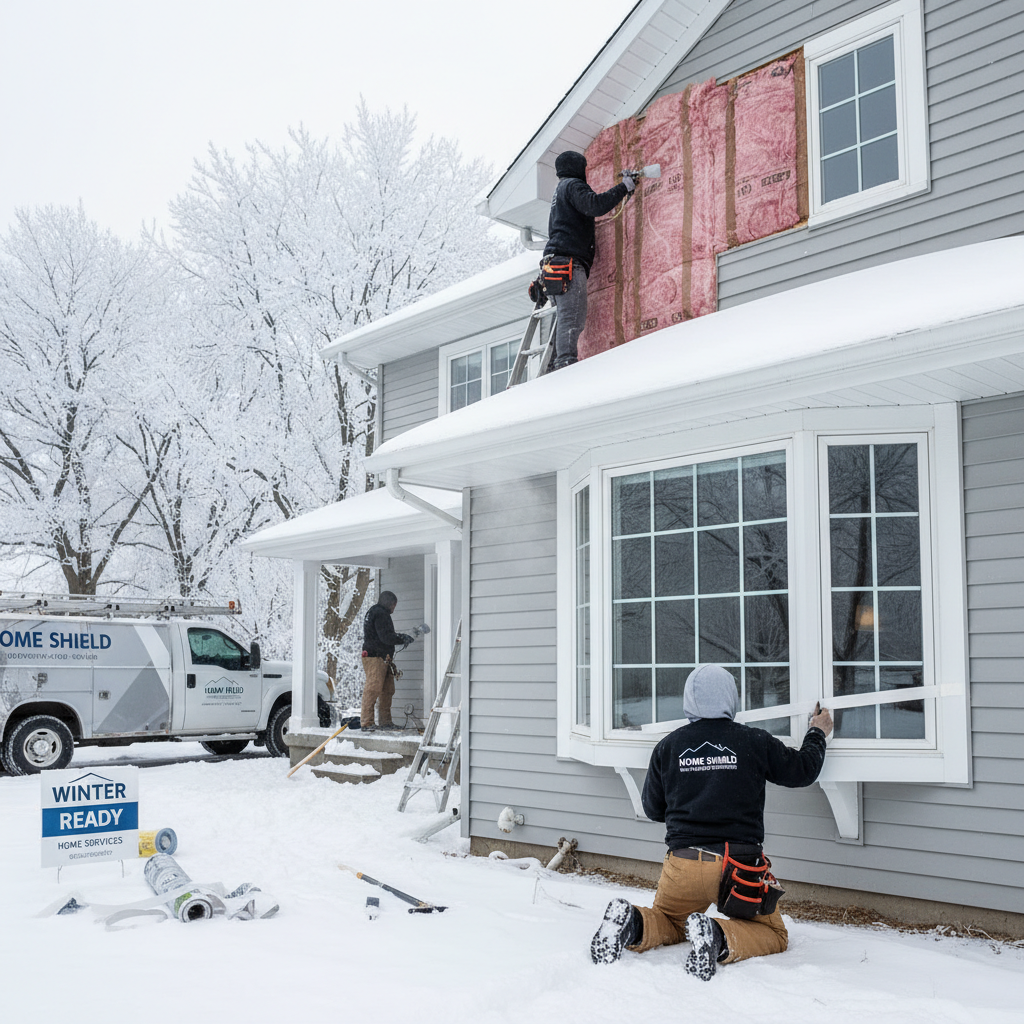
Winter maintenance is less about big projects and more about staying ahead of damage. After heavy snow, pay attention to roof edges and valleys, especially on north-facing sections. Ice dams are usually a symptom of warm attic air melting snow from below, then refreezing at the colder eaves. A roof rake can help after storms with 6 inches or more of accumulation, but it’s a short-term move. The real fix is air sealing and insulation.
In older homes, I look hard at attic bypasses around recessed lights, plumbing stacks, chimney chases, and pull-down stairs. Sealing those leaks with fire-rated foam, sheet metal, or proper covers can make a big difference. For insulation, many Hudson Valley attics are still under-insulated by a lot. Bringing an attic closer to about R-49, often around 15 to 17 inches of blown cellulose depending on the product, helps both comfort and ice-dam prevention.
Protect plumbing and keep humidity in check
Any pipe running through an exterior wall, crawlspace, or unheated basement should be insulated with at least 1/2-inch foam pipe wrap, and vulnerable lines may need heat cable in the right situations. When temperatures dive below about 15 degrees, open sink cabinet doors on exterior walls so warm room air reaches the plumbing. In vacant homes or weekend properties, set the thermostat no lower than 55 degrees and have somebody check the place.
Indoor humidity matters in winter too. Keep it around 30 to 35 percent during cold stretches so you don’t end up with heavy window condensation, peeling paint, and mold on cold corners. Too dry is uncomfortable, but too humid in January is what causes a lot of hidden trouble around windows and attic hatches.
Stay on top of safety and exterior wear
Test GFCIs, smoke detectors, and carbon monoxide alarms. Keep a few bags of ice melt on hand, but choose the right product for your surfaces. Calcium magnesium acetate or magnesium chloride is easier on bluestone and some masonry than straight rock salt, though no deicer is completely harmless. Shovel early before packed snow turns to ice, and check handrails and exterior steps for looseness after each freeze-thaw cycle.
Winter is also when you notice what the other seasons missed. A cold draft under one bedroom window, a wet basement corner after a thaw, or frost on a nail head in the attic are all clues. Write them down. The smartest homeowners I work with keep a running maintenance list through the winter, then knock it out when spring opens up.
Keep a simple notebook or phone note called house issues. Every time you notice a draft, a puddle, or an odd noise during winter, log the location. That list becomes your spring work plan.
People often blame ice dams on the roof itself and pay for patch work, when the real problem is warm attic air leaking upward from the house.
Common Mistakes to Avoid
The biggest mistake I see is treating maintenance like one big spring cleanup instead of a year-round routine. Houses in Rockland and Orange County don’t wear out evenly. Winter hits the roof, gutters, and plumbing hard. Spring exposes drainage and moisture issues. Summer reveals ventilation and wood movement. Fall is your preparation season. When everything gets pushed into one weekend, the important stuff gets missed.
Another common problem is fixing the symptom instead of the source. Homeowners will paint over a water stain, caulk the visible crack, or run a dehumidifier nonstop without dealing with the overflowing gutter, short downspout, or missing bath fan duct causing the moisture in the first place. That’s how you spend money twice. Water always has a path, and good maintenance means tracing it backward.
I also see people use the wrong materials. Cheap latex caulk on exterior trim, roofing cement smeared around flashing, indoor foam used where UV and weather will destroy it, or pressure-treated deck boards sealed before they’ve dried enough to accept stain. The product matters, but so does the prep. Dirty surfaces, damp joints, and rushed application are why so many small repairs fail in under a year.
The last one is skipping documentation. Keep receipts, model numbers, filter sizes, paint colors, and service dates in one folder. Mark the date when the furnace was serviced, when the gutters were cleaned, and when the sump pump battery was replaced. It sounds simple, but organized homeowners usually spend less because they don’t duplicate work, miss warranty windows, or forget the last time something was actually checked.
Break your maintenance calendar into four seasonal checklists and two professional service dates: one for cooling in spring and one for heating in fall. That schedule catches most preventable issues before they become expensive repairs.
Before calling for a repair, take five minutes to check the basics: tripped breaker, clogged condensate line, blocked downspout, dirty filter, or disconnected hose. You’d be surprised how many service calls come down to something simple.
Cost Breakdown: What to Expect
Maintenance costs in the Hudson Valley vary a lot by house age, roof height, tree cover, and whether you’re in a denser Rockland neighborhood or out in Orange County with more property to maintain. As a ballpark, handyman labor in Rockland County often lands around 95 to 140 dollars per hour, while Orange County is commonly around 85 to 125 dollars per hour. Many small-service contractors also have a minimum trip charge or a two-hour minimum. Licensed trades like HVAC, plumbing, and electrical usually run higher, often 125 to 185 dollars per hour plus a service call.
Typical seasonal maintenance ranges
Gutter cleaning on a typical one-story home may run about 175 to 300 dollars, while a two-story house with heavy tree coverage can be 300 to 550 dollars or more. Furnace or AC tune-ups often run 150 to 300 dollars per system depending on the company and the equipment. Dryer vent cleaning is usually around 125 to 250 dollars. Basic weatherstripping and door sweep replacement may cost 150 to 400 dollars professionally, depending on how many openings need work. Minor exterior caulking touch-ups can be a few hundred dollars, while a full window-and-trim reseal can climb into the 800 to 2500 dollar range depending on the house.
DIY costs versus hiring it out
DIY materials are usually reasonable. A quality exterior sealant tube might be 8 to 14 dollars, backer rod 10 to 25 dollars a pack, furnace filters 12 to 35 dollars each, and foam pipe insulation roughly 2 to 5 dollars per 6-foot length. A decent dehumidifier might be 250 to 350 dollars. Deck cleaner and stain for an average deck often totals 150 to 400 dollars in materials, not counting tools. The catch is that DIY goes sideways when ladders, steep roofs, electrical work, combustion equipment, or water-intrusion diagnosis are involved.
Where paying a pro saves money
Professional work is worth it for high gutters, roof repairs, boiler and furnace service, chimney issues, irrigation blowouts, and any recurring leak you haven’t been able to trace. A 200 dollar tune-up that catches a failing capacitor, a blocked flue, or a sump pump on its last legs is cheap compared with an emergency call or water cleanup. The smartest budget move is usually this: do the safe routine tasks yourself, then spend professional money where the risk, height, or diagnosis gets tricky.
Bundle small jobs into one visit. Having a handyman handle weatherstripping, dryer vent cleaning, minor caulking, and a downspout extension in the same trip usually costs less than scheduling four separate calls.
Replace worn sealants and fix drainage issues early. A few tubes of the right caulk and one downspout extension are a lot cheaper than repairing rotted trim, wet insulation, or a finished basement after a storm.
📍 How This Applies to Homes in Rockland & Orange County
Seasonal home maintenance matters everywhere, but it matters differently in the Hudson Valley. In Rockland and Orange County, we deal with harsh winters, freeze-thaw cycles, spring moisture, and summer humidity all in the same year. That combination is rough on roofs, masonry steps, basement walls, wood trim, and older windows. A house can look fine in December and still be quietly taking on water by March.
A lot of homes in towns like Nanuet, Spring Valley, Suffern, Nyack, and New City were built before the 1970s, and those houses have their own personality. They often have less insulation, draftier attics, older drainage layouts, tired caulking, and basements that were never meant to stay bone dry year-round. In Middletown and Newburgh, I also see plenty of homes where grading and runoff from larger lots create spring water problems that don’t show up until the ground is saturated. Older homes aren’t bad homes, but they do need a more deliberate maintenance rhythm.
Our freeze-thaw cycle is what catches people off guard. Water gets into a tiny crack in mortar, concrete, or flashing, freezes, expands, and then the next warm day opens it a little more. By the end of winter, that little crack is a loose step, a leaking chimney shoulder, or a popped section of caulk around a window. Then spring moisture finds every weak point. That’s why I’m always telling homeowners here not to postpone small exterior repairs.
Summer humidity is the other half of the story. In the Hudson Valley, a house can feel dry in winter and damp in July without anything being technically wrong until ventilation and air sealing are checked. Attics overheat, basements get musty, and older homes in shaded areas near Nyack or tree-heavy neighborhoods in New City and Suffern can hold moisture longer than people expect. A seasonal plan works here because our houses go through four very different kinds of stress every year.
Frequently Asked Questions
Ready to Get Started?
Get Your Free Estimate Today
Serving Rockland County & Orange County, NY. Professional results, guaranteed.
Request a Free Estimate →