By the time the kitchen cabinet door finally drops into your hand, the bathroom caulk is already black in the corners and that loose stair tread has been squeaking for six months. That's usually how it goes around here. Small repairs don't show up one at a time. They pile up quietly, especially in busy homes where everybody's rushing out the door in the morning and nobody wants to spend Saturday chasing screws, anchors, and paint matches at the hardware store.
In Rockland and Orange County, a lot of handyman calls start with one simple request and turn into three or four jobs once we walk the house. I'd say easily 6 out of 10 service calls in older Hudson Valley homes involve hidden moisture, old patchwork, or materials that aren't standard anymore. A faucet swap turns into replacing shutoff valves. Hanging a shelf turns into finding out the wall is plaster over wood lath, not drywall. That's why pricing can feel all over the map to homeowners who are just trying to get straight answers.
So let's talk real numbers. I'll break down how handymen usually charge, what makes one house more expensive than the next, where homeowners waste money, and what you can expect to pay for common repairs in Rockland County and Orange County. No fluff, no mystery pricing, just the kind of advice I'd give a customer in Nanuet, Middletown, or Newburgh before we schedule the work.
How Handymen Price Small Jobs
Most handyman work in Rockland and Orange County is priced one of three ways: a minimum service charge, an hourly rate, or a flat rate for a clearly defined job. The minimum charge covers travel, setup, basic materials on the truck, and the fact that even a 20-minute repair usually eats up a good part of a morning once you account for loading, driving, parking, and cleanup. Around here, that minimum is often what surprises people most, but it's normal. Nobody can stay in business driving from Nyack to New City for a $45 fix.
Hourly vs. flat-rate pricing
Hourly pricing makes sense when the scope is fuzzy. A good example is opening up a damaged section of 1/2-inch drywall under a second-floor bathroom. Until the wet insulation is out and the cavity is exposed, nobody knows whether we're dealing with a simple patch, a slow drain leak, or moldy framing. Flat-rate pricing works better for repeatable jobs like replacing a standard deadbolt, installing a preassembled closet shelf, or swapping out a faucet when the shutoffs work and the sink base isn't rotted.
Why small jobs can cost more than homeowners expect
A lot of the real cost is in preparation. Hanging one 24-inch by 36-inch mirror on drywall isn't just one screw and done. We locate studs, check for level, decide whether to use 50-pound toggle bolts or 3-inch GRK cabinet screws, protect the floor, and make sure the mirror won't pull out six months later. Same story with a ceiling fan. The visible part is the fan, but the important part is whether the electrical box is fan-rated and whether the existing wiring is safe and properly secured.
Materials, markup, and truck stock
Most experienced handymen carry a small inventory because it saves time on your job. That might include DAP Alex Flex caulk, Loctite Power Grab, 1 5/8-inch drywall screws, assorted wall anchors, painter's tape, composite shims, wood glue, and a few common shutoff valves. Some contractors mark up materials, some charge time to shop, and some do both on larger projects. That's not padding the bill; that's covering the time and liability of choosing the right product instead of making three trips because the homeowner bought the wrong size fill valve or a hollow-wall anchor for a plaster wall.
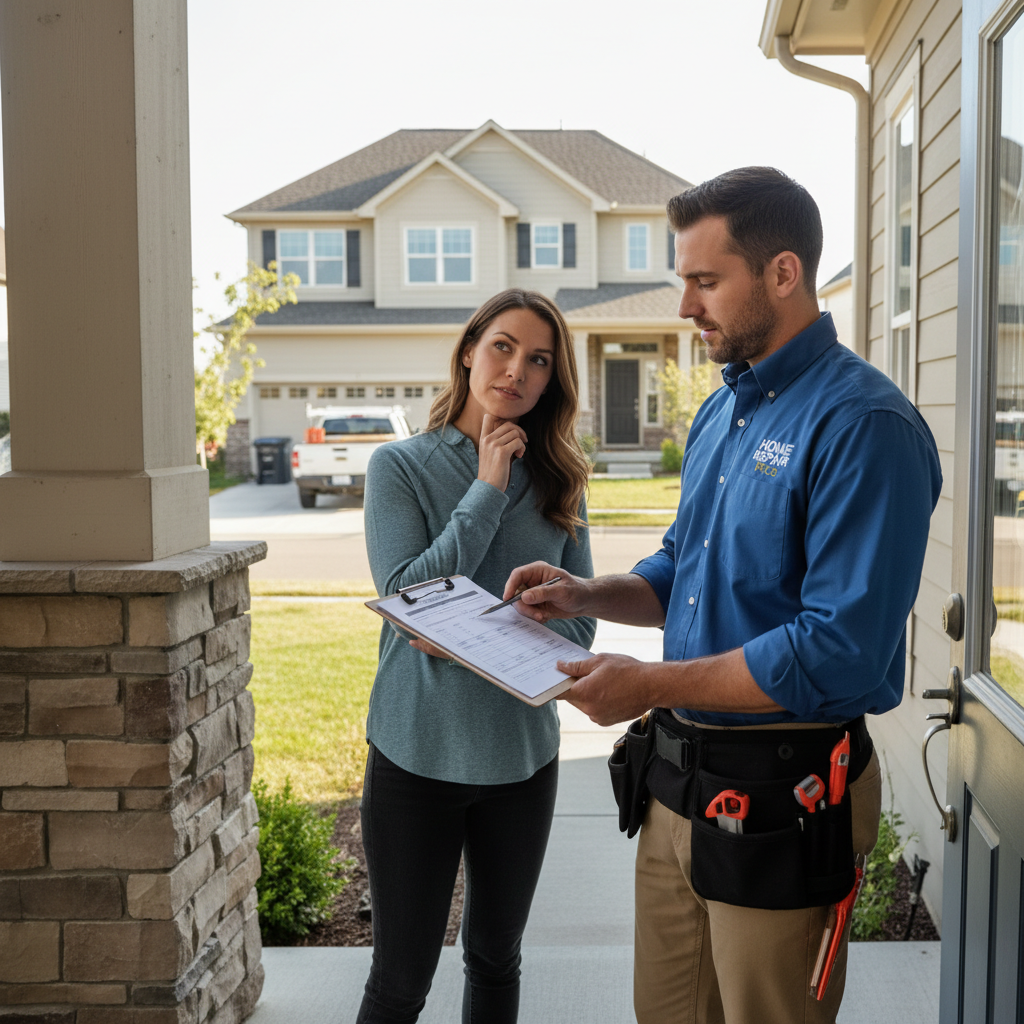
The cleanest way to keep pricing fair is a detailed scope before the work starts. I always tell homeowners to write a punch list, take photos, and mention the age of the home if they know it. A 1958 ranch with plaster walls and out-of-square doors is never priced the same as a newer townhouse with standard drywall and easy access.
Bundle several small repairs into one visit. A half-day punch list usually costs less per task than calling somebody back three separate times for a faucet, door adjustment, and drywall patch.
Homeowners often assume a 15-minute repair should only cost for 15 minutes. The real cost includes travel, setup, cleanup, insurance, and having the right tools and hardware on the truck.
What Changes the Price in Real Homes
Two houses on the same street can get very different quotes for what sounds like the same repair. That's because the house itself drives the price. Access, age, materials, previous repairs, and moisture damage all matter. Replacing a bath exhaust fan in a first-floor powder room with clear attic access is straightforward. Replacing one in a finished second-floor ceiling with no attic clearance, packed insulation, and brittle flex duct is a different animal completely.
Older walls, older plumbing, older surprises
In pre-1970s homes, especially in parts of Suffern, Spring Valley, and Newburgh, you run into plaster over wood lath, galvanized water lines, odd framing, and layers of old repairs. Cutting a neat opening in plaster takes more time than cutting drywall because the wall can crack beyond the repair area if it's not scored and supported properly. Swapping a faucet should be simple, but old multi-turn shutoff valves often seize or drip the second you touch them. Then the job becomes faucet plus valves, and the quote changes.
Height, access, and protection time
A repair at floor level is cheaper than the same repair over a stairwell or on a 12-foot foyer wall. Setting ladders safely, protecting floors with canvas drop cloths, and moving furniture takes time, but it's time that prevents damage. Exterior work gets priced the same way. Replacing one rotted trim board that's 1-inch by 4-inch by 8 feet near grade is quick. Replacing the same board two stories up behind a gutter line means extra labor, longer ladders, and sometimes a second worker.
Finish quality also affects cost
Homeowners sometimes compare a basic functional repair to a finish-grade repair like they're the same thing. They're not. A simple drywall patch can be patched, sanded, and primed with Zinsser 123. A paint-ready patch in a dining room with side lighting may need mesh tape or paper tape, setting-type joint compound like USG Easy Sand 45, a second skim coat, pole sanding, primer, and careful feathering 10 to 12 inches beyond the damaged area so the patch disappears. Better finish work takes longer, but it shows.
Season matters too. After a hard winter, I see more door adjustments, trim separation, cracked caulk, and small leaks from ice dam backup or freeze-thaw movement. In spring and early summer, moisture problems and soft exterior wood start showing themselves. That's why the same handyman cost in Rockland County NY can swing up or down depending on when you book and what the house reveals once the work begins.
When you ask for an estimate, include the home's approximate age, photos of the area, ceiling height, and whether the wall is plaster or drywall. That alone can make the quote much more accurate.
A lot of homeowners buy materials before the contractor sees the job. Wrong-size anchors, incorrect faucet parts, or cheap trim boards that aren't primed can turn a one-visit repair into a stop-and-start project.
Common Mistakes to Avoid
The biggest mistake I see is hiring strictly on the lowest number. A cheap estimate usually means one of two things: the scope isn't clear, or corners are about to be cut. Maybe the patch won't be primed. Maybe the exterior trim won't get back-primed before installation. Maybe the contractor is assuming your old shutoff valves will magically work. A fair quote should tell you exactly what's included, what isn't, and what could change if hidden damage shows up.
Vague punch lists cause expensive confusion
Another common mistake is saying something like fix a few things around the house without making a real list. That almost always leads to time getting burned while the homeowner walks room to room remembering items. Write every task down ahead of time, even the little ones: rehang pantry door, replace two smoke detectors, recaulk tub, patch 6-inch hole behind doorknob, tighten stair rail. When the list is clear, a handyman can group tools and materials efficiently and usually save you money.
Waiting too long on moisture-related repairs
Small water issues are where homeowners get hurt financially. A loose toilet, failed tub caulk, or tiny roof leak stain can sit for months looking harmless. Meanwhile the subfloor softens, drywall wicks moisture, and trim starts to swell. What could've been a $175 caulk and reset job turns into replacing sections of underlayment, baseboard, and possibly a vanity side panel. Around here, especially after wet springs, this happens all the time.
Buying bargain fixtures that fail early
The ultra-cheap faucet, fan, or lockset from the discount shelf usually costs more in the long run. I install fewer callbacks when homeowners choose decent mid-grade products like Moen faucets, Delta trim kits, Panasonic bath fans, Schlage deadbolts, and proper closet hardware from Rubbermaid FastTrack or ClosetMaid. The labor to install a bad product is the same as the labor to install a good one, and nobody wants to pay twice because the finish peeled or the part was missing a gasket.
One last mistake: not asking how the contractor handles cleanup and touch-up. A true professional builds that into the job. That means vacuuming drywall dust, wiping surfaces, labeling leftover paint or parts, and telling you what to watch over the next week as materials cure or settle.
Ask for a written scope that lists labor, materials, allowances, and possible hidden-condition charges. It keeps both sides honest and prevents arguments halfway through the job.
Make one organized repair list and group work by room. A handyman can knock out a bathroom, hallway, and kitchen punch list in one visit far cheaper than separate appointments.
Cost Breakdown: What to Expect
Let's get into the numbers. In Rockland County, a licensed and insured handyman or small repair contractor typically charges about $95 to $140 per hour for one skilled person, with a minimum service call in the $125 to $200 range. In Orange County, rates are often a little lower, usually around $85 to $125 per hour, though specialty carpentry, tile repairs, or work requiring a second person can push higher. If a helper is needed, figure another $35 to $60 per hour depending on the task.
Common interior job ranges
For basic interior repairs, here's what homeowners usually see. Replacing a standard kitchen or bath faucet: about $175 to $325 plus the fixture. Installing a toilet when the flange is sound: roughly $250 to $475 plus the toilet and wax ring or rubber seal. Patching a small drywall hole under 6 inches: $150 to $275. Repairing a larger 1-foot by 1-foot to 2-foot by 2-foot wall area, tape to finish-ready primer: $250 to $600 depending on texture and paint matching. Hanging a TV bracket on wood studs: $180 to $350. Replacing a light fixture or ceiling fan: $150 to $450 depending on wiring and box support.
Doors, trim, and exterior repair ranges
Interior door adjustments usually run $125 to $250 if it's a hinge, strike plate, or planing issue. Installing a new lockset or deadbolt is often $140 to $275. Replacing rotted exterior trim or a few deck boards can range from $300 to $900, mostly depending on access, paint, and how much hidden rot is discovered when the old material comes off. Recaulking a tub, shower, or a handful of drafty windows generally falls between $150 and $350. A half-day punch list for several mixed repairs often lands around $350 to $650, while a full-day visit can run $700 to $1,100.
DIY cost vs. professional cost
DIY can absolutely save money when the task is simple and you already own tools. Recaulking a tub might cost $20 to $40 in materials using GE Advanced Silicone 2, painter's tape, a scraper, and mineral spirits. A faucet install might run $120 to $300 in materials if you need braided supply lines, new shutoff valves, plumber's putty, and a basin wrench. But the risk is in the miss. Crack an old valve, mount a TV into drywall instead of studs, or fail to flash and seal an exterior trim repair, and the savings disappear fast. You're paying a pro for judgment as much as labor.
What makes a quote rise above the basic range
Expect higher costs when there are plaster walls, old galvanized plumbing, nonstandard parts, second-story ladder work, parking headaches, HOA scheduling rules, or paint-grade finish work that has to look perfect in daylight. On the flip side, expect better value when you provide good photos, choose reliable fixtures, clear the work area, and combine multiple repairs into one appointment. That's the smartest way to manage handyman cost in Rockland County NY without sacrificing quality.
Before the appointment, clear access to the work area, empty sink cabinets, and have fixtures on site. Saving 20 to 30 minutes of prep time can trim a noticeable amount off an hourly job.
Inspect caulk lines, door hardware, and exterior trim every spring and fall. Catching loose fasteners and failed sealant early is much cheaper than repairing water damage later.
📍 How This Applies to Homes in Rockland & Orange County
Homes in Rockland County and Orange County age a little differently than homes in flatter, drier parts of the country, and that shows up in repair bills. The Hudson Valley climate is tough on houses. Harsh winters, freeze-thaw cycles, spring moisture, and summer humidity all work on trim, caulk, doors, and flooring year-round. A small gap around a window in January becomes a draft complaint. By April, that same area may show peeling paint or soft wood once the moisture has had time to work in.
A lot of homes in Nanuet, Spring Valley, Suffern, Nyack, and New City were built before modern materials became standard, especially pre-1970s homes with plaster walls, older framing, dated electrical boxes, or original bathrooms that have been patched over the years. In those homes, a simple handyman visit can uncover uneven studs, brittle tile, rusted shutoffs, or old repairs done with whatever the previous owner had in the basement. That doesn't mean the house is bad. It just means the work usually takes longer, and experienced contractors price for that reality.
Orange County has its own version of the same issue. In Middletown and Newburgh, I see plenty of older colonials, ranches, and two-family homes where moisture management and deferred maintenance drive the cost more than the repair itself. Summer humidity can swell wood doors and make windows sticky. Spring thaw can expose soft exterior trim, deck movement, or loose railings that didn't seem urgent during winter. Homeowners are often surprised that the cheapest time to handle these issues is before they become visible damage.
Locally, the best value comes from seasonal maintenance and bundled repairs. In the Hudson Valley, I always recommend a spring punch list for caulk, trim, screens, railings, and small exterior repairs, then a fall list for weatherstripping, door adjustments, and leak checks before freezing weather returns. That's the practical way to keep handyman costs predictable in Rockland and Orange County instead of paying emergency pricing after a bad storm or a cold snap.
Frequently Asked Questions
Ready to Get Started?
Get Your Free Estimate Today
Serving Rockland County & Orange County, NY. Professional results, guaranteed.
Request a Free Estimate →