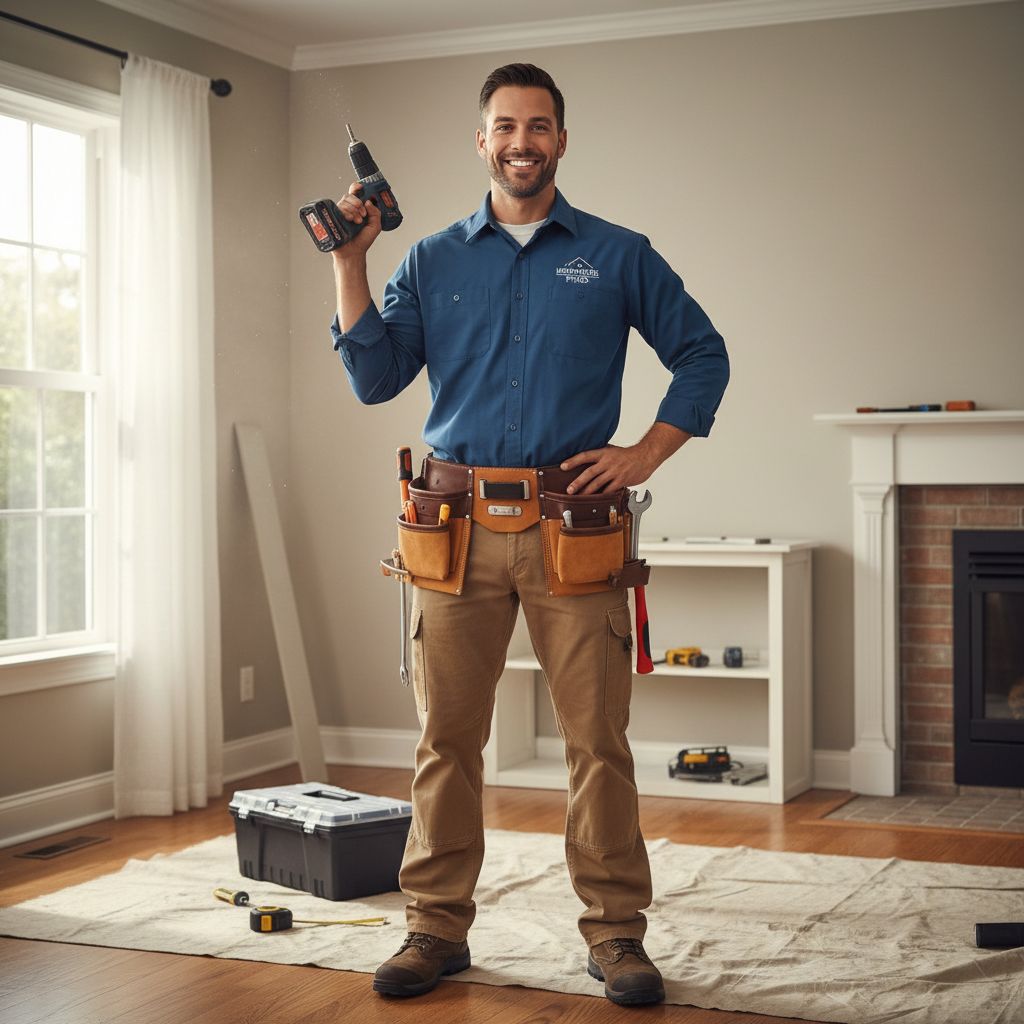
Monday morning starts the same way more often than you'd think: the front door won't latch, a restroom partition is loose, two ceiling tiles are stained from last week's leak, and the vinyl base is peeling where customers can see it. Nobody plans for those calls. They just land on your desk right when the week gets busy. Around Rockland and Orange County, a lot of small businesses are running in older buildings, mixed-use properties, and renovated spaces that look fine from the road but need constant little fixes behind the scenes.
One thing I've learned after more than 20 years doing repair work in this area is that the small stuff is what shuts down momentum. In my own service calls, most business repair lists start with one issue and turn into five by the time we walk the property. A door dragging by 1/8 inch can wear out a closer early. A failed caulk joint around a sink can swell a cabinet base in a month. A missing transition strip can become a trip hazard before the owner even notices it. None of these jobs are glamorous, but every one of them matters.
That's where a dependable commercial handyman comes in. Not for major structural work or full-scale renovations, but for the day-to-day repairs, adjustments, replacements, patching, painting, mounting, weatherproofing, and safety fixes that keep a business running cleanly. Whether you own a storefront, rental property, office suite, salon, medical space, or mixed-use building, a good commercial handyman in Rockland County NY saves you time, prevents damage, and keeps little problems from turning into expensive ones.
What Commercial Handyman Services Cover
A commercial handyman handles the repair and maintenance work that keeps a business usable, safe, and presentable without dragging you into a full renovation. That usually means doors that don't close right, damaged drywall, loose handrails, broken shelving, stained ceiling tiles, missing trim, restroom accessory installs, weatherstripping, caulking, touch-up painting, light fixture swaps, hardware replacement, minor carpentry, and punch-list repairs after a move-in or tenant turnover. In a lot of local businesses, especially older spaces, that's the work that comes up every single month.
Doors, hardware, and everyday wear
Commercial doors take a beating. We adjust hinges, reset strike plates, replace sagging closers, install kick plates, and swap panic hardware when needed. A typical aluminum storefront door that's rubbing by even 1/8 inch can start misaligning the latch and wearing down the closer arm. On wood doors, I'll often use 3-inch screws into the hinge-side framing, not just the jamb, to pull a loose door back into line. For closers, products like the Norton 1601 series or LCN 4040XP are common because parts are available and they hold up well in high-traffic spaces.
Drywall, paint, and finish repairs
Scuffed walls, corner damage, and patchwork from old signage make a business look tired fast. For clean repairs, I like setting-type joint compound such as USG Easy Sand 45 for deeper fills, followed by a lightweight finish coat and sanding with a vacuum-attached sander. In offices and retail spaces, stain-blocking primers like Zinsser B-I-N or Cover Stain matter because old water marks and nicotine bleed will come right back through cheap primer. For durable finish coats in commercial interiors, Sherwin-Williams Pro Industrial or Benjamin Moore Scuff-X both hold up better than bargain paint when chairs, carts, and foot traffic hit the walls.
Restrooms, break rooms, and safety items
These are the rooms that generate the most complaints. Loose toilet paper dispensers, wobbly grab bars, failing caulk at sinks, delaminated vanity panels, and damaged FRP can all be handled by a commercial handyman. When I mount grab bars, I want solid blocking or proper toggles rated for the wall assembly, and I use stainless fasteners where moisture is constant. A simple bead of 100 percent silicone around a sink or backsplash, tooled properly and allowed to cure, can prevent cabinet damage that would cost ten times more later.
Exterior odds and ends that protect the building
A lot of people think commercial handyman work stops at the front door, but it doesn't. We replace cracked vent covers, resecure loose downspout straps, install door sweeps, swap mailbox hardware, patch small trim rot, reseal penetrations, and handle seasonal weatherproofing. On mixed-use and small commercial properties around here, I've also done plenty of concrete crack filling, parking-lot sign repairs, fence gate adjustments, and exterior light maintenance. It's not flashy work, but it's the stuff that keeps water, drafts, and liability out of your building.
Keep a running repair list instead of calling one item at a time. Bundling five or six small jobs into one visit usually saves on trip charges and cuts labor waste.
A lot of owners buy residential-grade hardware for commercial doors because it's cheaper up front. It almost always wears out faster and costs more once you're replacing it again in a year.
How We Handle Repairs Without Disrupting Business
The best commercial repair work is the kind your customers barely notice. Businesses don't want a circus in the middle of the day, and honestly, I don't blame them. Good planning matters just as much as good repair work. Before we start, I like a clear walk-through, photos of problem areas, and a written punch list so we can group the work in the right order instead of bouncing from one end of the building to the other.
Scheduling around business hours
A small office may be fine with daytime work, but a salon, medical office, or storefront usually needs tighter timing. We'll often split the job into opening-hour tasks, after-hours tasks, and noise-heavy tasks. For example, caulking, hardware swaps, and touch-up paint can happen during slower periods, while cutting drywall patches, drilling masonry anchors, or replacing ceiling grid pieces is better done before opening or after close. That kind of sequencing keeps the job moving without slowing down your staff.
Clean work areas and containment
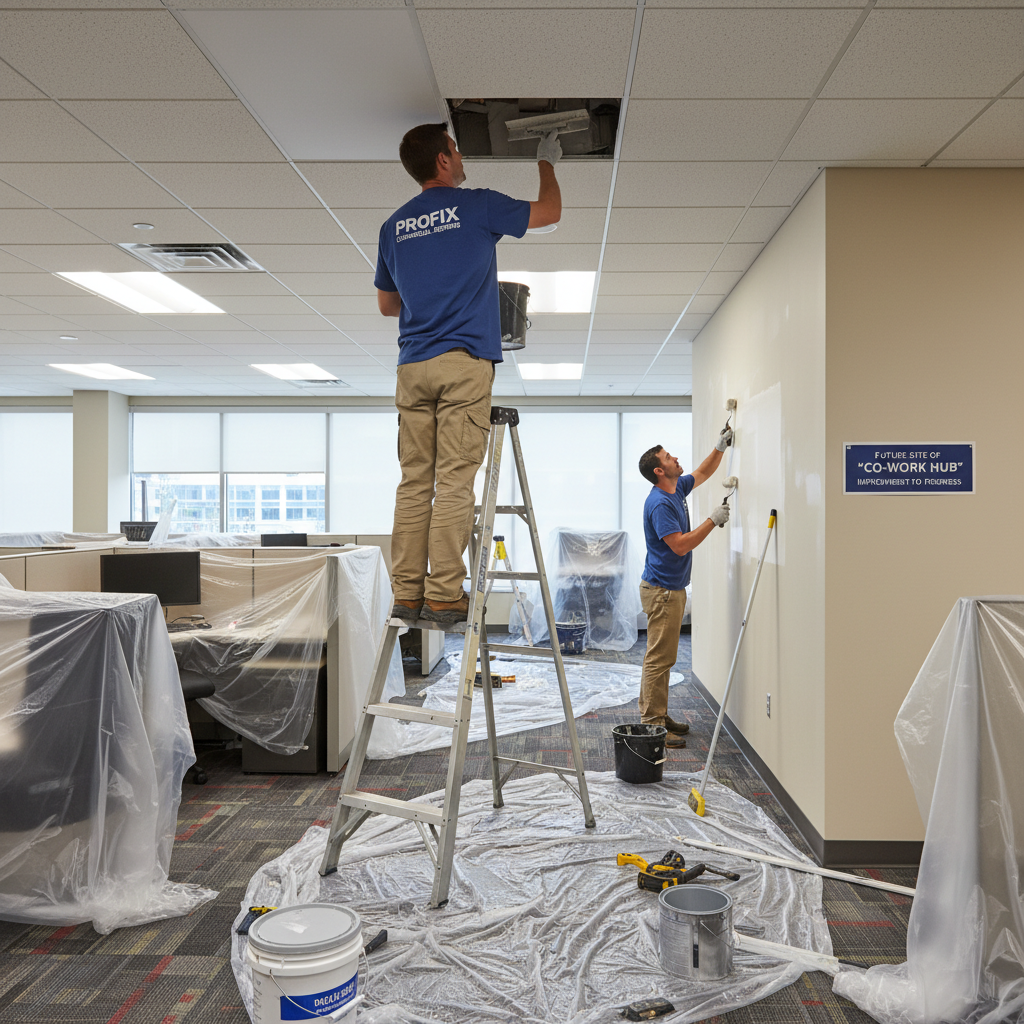
Dust control is a big deal in occupied spaces. We use drop cloths, HEPA vacs, and 6-mil poly or ZipWall barriers when sanding, patching, or opening up damaged wall areas. In food service, daycare, and medical-type spaces, clean-up isn't optional, it's part of the job. I also like to pre-cut what I can outside, label hardware in bags, and stage materials so we're not leaving a trail of cardboard and fasteners through the building.
One trip when possible, not three
A seasoned commercial handyman learns to diagnose the full problem, not just the symptom. A stained ceiling tile isn't just a ceiling tile; it may mean a roof leak, condensation issue, or HVAC sweating above the grid. A loose door closer may also mean hinge wear, frame movement, or a damaged arm shoe. We try to bring common repair stock on the truck: 2x2 and 2x4 ceiling tiles, universal closers, weatherstrip, white and almond devices, touch-up caulk, 1 5/8-inch drywall screws, 3-inch exterior screws, toggle bolts, and paintable latex caulk. That saves return trips and gets you back to normal faster.
Documentation matters for owners and property managers
On commercial jobs, a clean invoice and before-and-after notes are almost as important as the repair itself. Owners need records for tenants, insurance, and budgeting. Property managers need to show what was done and what still needs attention. When we wrap up, I like to note completed repairs, materials used, and anything that should be monitored next, like minor water staining, cracked grout lines, or a door frame that's starting to shift.
Walk the property once a month with a phone and take photos of every small issue. Send one organized list with pictures and locations, and your handyman can quote and plan the visit much faster.
Waiting until a tenant, customer, or employee complains usually means the repair has already gotten worse. Small maintenance done on schedule is almost always cheaper than reactive work.
Common Mistakes to Avoid
The biggest mistake I see is treating commercial maintenance like something you only deal with when it breaks. That approach works until it doesn't. Once a door closer fails, a threshold loosens, or water gets behind base trim, the repair usually spreads into adjacent materials. What could've been a 45-minute adjustment turns into a half-day repair with painting, patching, or replacement parts.
Another common mistake is patching over the symptom without fixing the cause. I've seen owners repaint the same bubbled drywall three times without checking for moisture, and I've seen new ceiling tiles installed under an active leak because somebody wanted the stain gone before an inspection. In a business setting, that wastes money and creates a false sense that the problem was solved. Moisture meters, visual inspection above drop ceilings, and checking exterior penetrations are basic steps that shouldn't be skipped.
Cheap materials are another headache. Residential hinges on a busy office door, bargain caulk in a restroom, low-grade paint in a hallway, or undersized anchors in block walls all fail early. Commercial spaces need heavier-duty products because the traffic is different. A tube of good silicone, a better door closer, or proper masonry fasteners might cost a bit more up front, but they last longer and cut call-backs.
One more mistake is not thinking about safety and code-adjacent issues. Even when a handyman isn't doing licensed trade work, we still need to respect clearances, mounting heights, and accessibility concerns. Loose handrails, missing transition strips, damaged stair nosing, wobbly toilet partitions, and poorly mounted shelving aren't just annoyances. They're liability items. In my book, those go to the top of the list ahead of cosmetic work.
Finally, a lot of owners call too many different people for tiny jobs and end up with inconsistent work. One person patches, another paints, somebody else hangs hardware, and nobody takes responsibility for the whole punch list. A good commercial handyman is valuable because he can see how those small systems connect and knock out the work in a logical order.
Prioritize repairs in this order: water intrusion, safety hazards, door and hardware issues, restroom function, then cosmetic items. That sequence protects the building and keeps business interruption down.
Before repainting damaged walls, spend the money to fix leaks, failing caulk, or door impact problems first. Otherwise you're paying twice for the same area.
Cost Breakdown: What to Expect
Commercial handyman pricing in Rockland County and Orange County usually depends on three things: travel, complexity, and whether the work can be bundled. For a single skilled handyman, typical rates run about $95 to $145 per hour in this market. A two-person crew for larger punch lists, ladder work, material handling, or faster turnaround often lands around $150 to $225 per hour. Many companies also charge a minimum service call or first-hour rate, usually in the $125 to $195 range. After-hours or weekend work is commonly higher.
For common jobs, here are realistic ranges. Adjusting a commercial door, replacing weatherstripping, and tweaking the strike can run $145 to $325 depending on hardware condition. Replacing a door closer usually falls between $185 and $350 plus parts, with quality closer bodies often costing $55 to $180. Drywall patching and paint touch-up for a small wall area may run $250 to $650 depending on texture, color match, and return visits for dry time. Replacing a few stained 2x2 ceiling tiles might cost $150 to $400 if access is simple; more if there's active leak investigation or high ceilings involved.
Restroom and fixture work has its own range. Re-caulking one sink or toilet base may be $125 to $225 as part of a bundled visit. Installing grab bars, dispensers, mirrors, or wall protection can run $175 to $500 per item depending on wall type and backing. Shelving installs, TV mounting in office spaces, minor trim repair, or hardware swaps usually fall somewhere between $150 and $600 depending on the number of locations. Exterior weatherproofing, small fascia or trim patching, and downspout reattachment can vary from $200 to $750 based on ladder setup, materials, and accessibility.
DIY cost sounds lower on paper, and sometimes it is for very simple tasks. A tube of GE Silicone 2 might be under $10, a basic door sweep $15 to $35, ceiling tiles $8 to $18 each, and a gallon of decent touch-up paint $45 to $85. But the hidden cost is time, tools, and getting it wrong. If you buy the wrong closer arm, miss solid backing behind a grab bar, or patch drywall without sealing a stain, you can easily spend more correcting the repair than hiring it out in the first place.
The smartest way to control cost is to bundle work and be clear about priorities. A planned half-day or full-day punch-list visit is usually more cost-effective than three emergency calls over two weeks. For businesses with recurring needs, some owners set up quarterly maintenance visits so we can handle seasonal caulking, door adjustments, tile replacement, hardware tightening, and exterior checks before those items become larger repairs.
Combine repairs by area. Having all restroom items, all door hardware, or all paint touch-ups done in one trip usually cuts labor time more than spreading them out.
Check door sweeps, exterior caulk joints, and ceiling stains every season. Catching moisture or air leaks early can prevent drywall, flooring, and trim replacement later.
📍 How This Applies to Homes in Rockland & Orange County
Around the Hudson Valley, this kind of work hits a little differently because our buildings take a beating from the weather. Harsh winters, freeze-thaw cycles, spring moisture, and summer humidity all work on doors, trim, caulk joints, flooring transitions, and painted surfaces. I've seen exterior doors in Nanuet and New City go out of alignment after one rough winter, and I've seen basement-level office spaces in Nyack and Newburgh pick up moisture smells and trim swelling by late spring if the air movement isn't right.
A lot of the properties in Rockland and Orange County also have age working against them. Older pre-1970s homes that were converted into offices, rentals, salons, or mixed-use spaces often have uneven framing, patched walls, older hardware, and layers of old repairs. In Spring Valley, Suffern, and parts of Middletown, it's common to walk into a building where the fix isn't just replacing one broken part. The surrounding materials may already be out of square, soft from moisture, or worn from years of heavy use. That's where experience matters, because the repair has to fit the real condition of the building, not just the catalog photo.
This topic also matters to homeowners more than people think. Plenty of local homeowners own a rental, run a small business from a detached building, lease out a first-floor storefront, or live above a commercial space. When that happens, you need someone who understands both the practical side of repairs and how local weather affects older structures. In places like Nanuet, Spring Valley, Suffern, Nyack, New City, Middletown, and Newburgh, I spend a lot of time dealing with swelling wood trim, sticking doors, failed exterior caulk, porch and stair rail repairs, and moisture-related interior patching.
The bottom line is that in the Hudson Valley, small maintenance isn't really small for long. Freeze-thaw movement opens gaps. Spring moisture finds weak spots. Summer humidity swells wood and stresses paint. Whether it's a home, a rental, or a small commercial property tied to your household income, staying ahead of those issues is the cheapest way to own property around here.
Frequently Asked Questions
Ready to Get Started?
Get Your Free Estimate Today
Serving Rockland County & Orange County, NY. Professional results, guaranteed.
Request a Free Estimate →