That front door always seems to act up at the worst possible time. It's a freezing January morning in New City, your coffee's in one hand, your keys are in the other, and the door drags so hard across the threshold you have to shoulder it shut. Then a few months later, in the thick of August humidity, that same door squeaks like an old screen porch and sticks against the jamb again. I've been repairing doors in Rockland and Orange County for more than 20 years, and that's how these calls usually start.
Around here, I'd say a solid chunk of spring and late-summer handyman calls have something to do with doors that won't latch, rub the floor, or leak air around the edges. The Hudson Valley climate is rough on them. Freeze-thaw cycles loosen hinge screws, spring moisture swells wood, and summer humidity can change the fit of a door by 1/16 to 1/8 inch, which is more than enough to cause sticking. On exterior doors, even a small gap can turn into a noticeable draft and a higher heating bill.
The good news is most common door issues can be repaired without replacing the whole unit. The trick is figuring out whether you've got a hinge problem, a swollen slab, a weatherstripping problem, or movement in the jamb itself. That's where a lot of homeowners lose time and money. In this guide, I'll walk you through what actually causes sticking, squeaking, and gaps, how I diagnose them on site, and when it makes sense to handle it yourself versus calling for door repair Orange County NY homeowners can count on.
Why Doors Start Sticking, Squeaking, and Gapping
Seasonal movement is usually the first culprit
Most sticking doors I see in Rockland and Orange County aren't broken so much as they're moving with the seasons. Wood doors and wood jambs take on moisture, especially during spring rain and humid summer stretches. A painted six-panel wood door can swell enough to tighten the reveal by 1/16 inch or more, and that's all it takes to make the latch side rub. On exterior doors, the bottom rail and lower hinge side usually tell the story first because that's where moisture tends to sit longer.
Hinge sag changes the whole fit of the door
A door that sticks at the top latch corner often isn't swollen at all. It's sagging. I check the reveal first, meaning the gap between the door slab and the jamb. On a properly hung door, that gap should look fairly even, usually around 1/8 inch along the top and latch side. When the top reveal gets tight on the latch side and wider on the hinge side, the top hinge screws have usually loosened or stripped. In older homes, especially pre-1970s houses, I also find worn hinge mortises and split screw holes in the jamb.
Squeaks come from friction, paint buildup, or worn hinge pins
A squeaky door sounds simple, but the noise can come from a few places. Sometimes it's dry metal-on-metal contact in the hinge knuckle. Sometimes it's layers of paint bridging the hinge leaves so the hinge can't move cleanly. I've also seen cheap replacement hinges installed slightly out of line, which twists the pin and creates that chirping sound every time the door opens. A quick spray of lubricant might quiet it for a week, but if the pin is dirty or the hinge leaves are misaligned, the noise comes right back.
Gaps let in drafts, bugs, and moisture
Gaps around exterior doors are where comfort and energy loss become real. I use a flashlight test at night, a dollar-bill test on the weatherstrip, and a 4-foot level on the jamb to see where the problem starts. A gap larger than 1/8 inch along the latch side or daylight under the sweep usually means the weatherstripping has flattened out, the threshold needs adjustment, or the slab has shifted in the frame. On steel and fiberglass doors, the slab itself is usually stable, so gaps more often point to hinge movement, frame movement, or failed seals.
Sometimes the door isn't the problem, the opening is
In older Hudson Valley homes, the framing around the door can move over time. I've checked openings in Nyack and Middletown where the jamb was out of plumb by more than 1/4 inch from top to bottom, and no amount of lubricant or new weatherstrip was going to fix that. When I see cracks at the corner of the casing, loose threshold fasteners, or soft wood near the sill, I start looking beyond the slab. That's how you separate a simple service call from a repair that needs jamb work, shimming, or threshold replacement.
Before trimming or planing anything, close the door slowly and mark every rub point with painter's tape. Nine times out of ten, the pattern of contact tells you whether the issue is sagging hinges, swelling, or a threshold that's too high.
Homeowners often assume a sticking door needs to be shaved down right away. If the real problem is loose hinges or a shifted strike plate, trimming the slab just creates bigger gaps later when the humidity drops.
How to Fix the Most Common Door Problems
Start with a proper diagnosis
The first thing I do is open the door halfway and lift gently on the handle side. If there's play, the hinges or screws are likely worn. Then I check the reveal, the latch alignment, and the threshold contact. For an exterior door, I also look at the weatherstripping compression. You want the seal snug, not crushed flat. A lot of repairs get easier once you know whether you're dealing with movement at the hinge side, swelling at the slab, or a worn-out seal.
Fixing a sticking door at the hinges
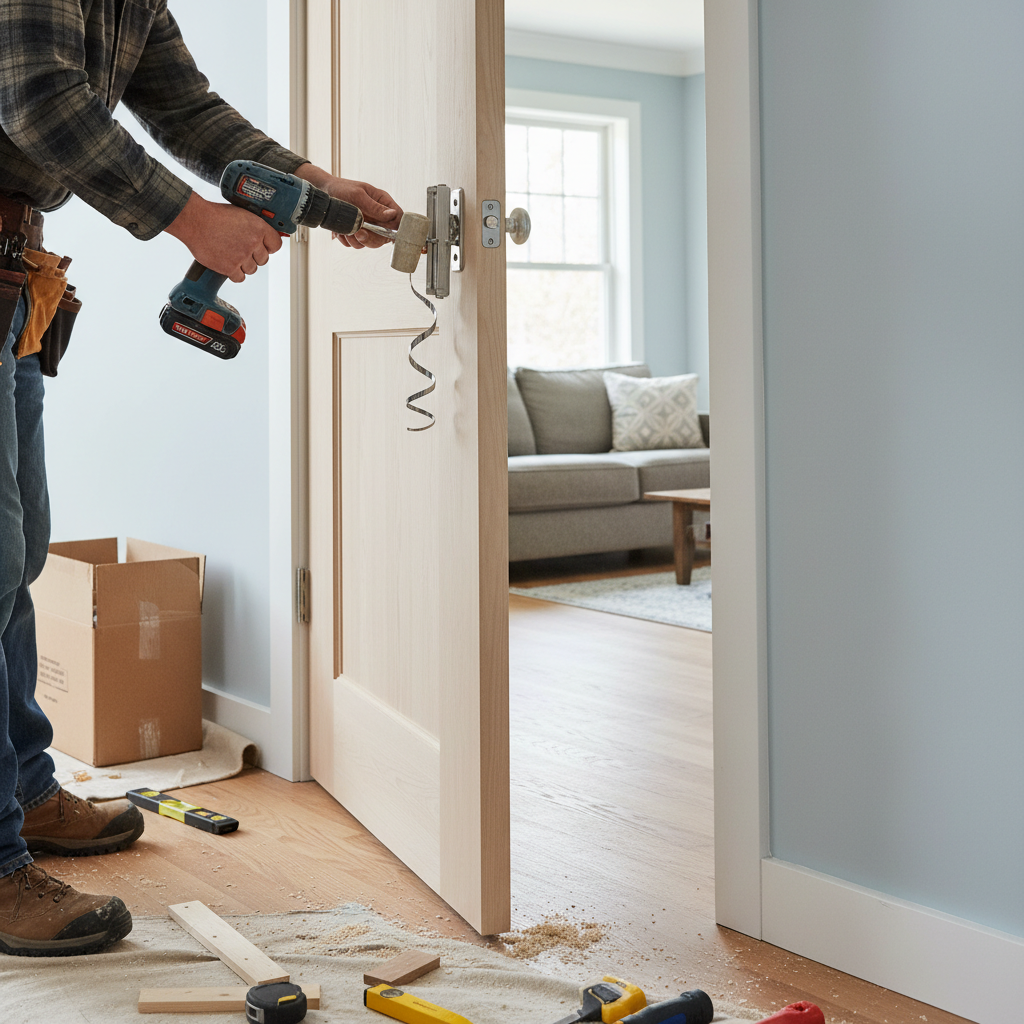
For a sagging interior or exterior door, I usually start at the top hinge. Replacing one short screw with a 3-inch #9 wood screw or a 3-inch SPAX multi-material screw through the hinge leaf and into the framing often pulls the jamb back into position. If the hinge mortise is chewed up, I'll back the hinge out, glue in hardwood toothpicks or a dowel with Titebond III, let it set, and re-drive the screws. On some doors, adding a thin cardboard or composite shim behind the lower hinge or middle hinge helps correct the swing without removing material from the slab.
Fixing rub points by planing the slab
When the door truly is swollen or oversized, I remove the slab and plane only the edge that's rubbing. A sharp block plane like the Stanley 12-220 works fine for small corrections, while a track saw with a straightedge is cleaner for larger adjustments. I take off a little at a time, usually no more than 1/16 inch per pass, then test-fit. After planing, the raw edge has to be sealed. On wood doors, I'll hit it with Zinsser BIN primer and two coats of finish paint, or polyurethane on stained doors. Skipping that step is why some repairs fail by the next season.
Fixing squeaks the right way
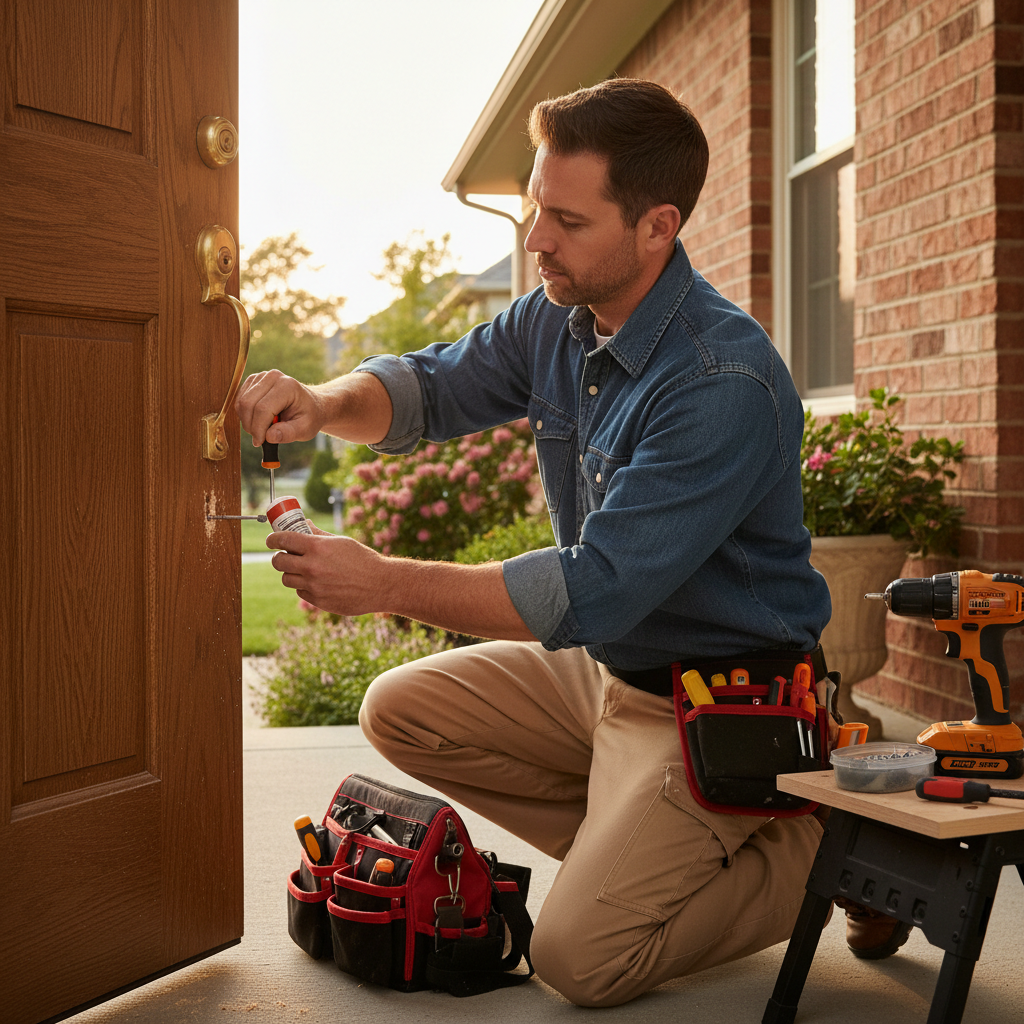
For squeaky hinges, I pull one hinge pin at a time so the door stays stable. I clean the pin with 220-grit sandpaper or fine steel wool, wipe out the hinge barrel, and use a real lubricant like Tri-Flow, Blaster Garage Door Lubricant, or white lithium grease. WD-40 is fine as a cleaner to loosen grime, but I don't rely on it as the final lubricant because it wears off fast. If the hinge leaves are bent or misaligned, I replace the hinge with a same-size leaf and matching corner radius, usually 3 1/2-inch for interior doors and 4-inch for heavier exterior doors.
Fixing gaps, drafts, and latch issues
For exterior gaps, weatherstripping and threshold adjustment do a lot of the heavy lifting. I like kerf-in seals such as Schlegel Q-Lon because they last longer than cheap peel-and-stick foam. At the bottom, a Pemko or M-D style sweep can stop daylight under the slab, and many adjustable thresholds can be raised with a screwdriver a few turns at a time. If the latch isn't catching cleanly, I mark the strike with lipstick or blue tape, then move the strike plate just enough to center the latch, usually 1/16 to 1/8 inch. When the casing area is drafty, I also check for missing insulation around the jamb and seal exterior trim joints with OSI Quad Max or a high-quality urethane sealant.
When you replace hinge screws, drive the long screw through the top hinge first. That's the hinge that does the most work, and it's often the one that fixes a sagging door all by itself.
A lot of people install thick adhesive weatherstrip to hide a bad fit. That can make the door harder to latch and doesn't solve a hinge, threshold, or jamb alignment problem underneath.
Common Mistakes to Avoid
The biggest mistake I see is treating every sticking door like a trimming job. Homeowners grab a sander, take too much off the latch side, and then call me in winter because the door has a 1/4-inch gap and whistles every time the wind picks up. Always check the hinge screws, hinge alignment, and strike position before removing material from the slab. The door should tell you where the problem is if you slow down and inspect it.
Another common one is using the wrong products. Cheap aerosol lubricant may quiet a hinge for a day or two, but it won't clean up a worn pin or a hinge packed with paint dust. Peel-and-stick foam weatherstrip from the bargain bin also fails fast on frequently used exterior doors. For long-term repairs, better hardware and better sealing materials matter. A quality hinge, kerf weatherstrip, and proper screws outperform quick fixes every time.
People also forget to seal what they cut. Any time you plane a wood door, expose a bottom edge, or drill into a repaired jamb, that fresh surface needs primer, paint, or finish. Raw wood pulls in moisture, especially in spring, and that's how you end up doing the same repair again a few months later. On exterior doors, I pay special attention to the top and bottom edges because those are easy to miss and they absorb moisture faster than most homeowners realize.
The last mistake is ignoring signs of water damage or structural movement. If the threshold feels spongy, the jamb is dark and soft near the sill, or the casing joints keep cracking, you're probably past a simple adjustment. In those cases, forcing the door to fit can hide a bigger issue and cost more later. That's when it's worth having a contractor look at the full opening, not just the slab and hardware.
Use long hinge screws, quality weatherstripping, and a good primer or sealer from the start. The repair usually costs a little more up front, but it lasts a lot longer in Hudson Valley weather.
Before replacing a whole door, ask whether the problem is limited to hinges, weatherstripping, the strike plate, or the threshold. A $125 to $350 repair can often solve what homeowners assume is a full replacement issue.
Cost Breakdown: What to Expect
For basic door repair Orange County NY homeowners call me about most often, labor usually starts with a service minimum. In Rockland and Orange County, insured handyman and light carpentry rates commonly run about $90 to $130 per hour, while a finish carpenter or door specialist can run $120 to $175 per hour depending on the scope. Many contractors also have a minimum trip charge or first-hour charge in the $125 to $225 range, especially for smaller jobs.
DIY costs are manageable when the repair is straightforward. A can of Tri-Flow or white lithium lubricant usually runs $8 to $15. A pack of 3-inch screws is often $6 to $12. New hinges can cost $8 to $20 each for standard interior hardware and more for heavy-duty exterior hinges. Kerf weatherstripping is typically $15 to $35 per door, a new sweep is $15 to $40, cedar shims are under $10, and primer plus paint for sealing a trimmed edge may add another $20 to $50 if you don't already have materials on hand.
Professional repair pricing depends on what's actually wrong. Replacing hinge screws and adjusting a sagging interior door might land around $125 to $225. Pulling a slab, planing it, sealing the edge, and rehanging it is more often $200 to $400. Replacing exterior weatherstripping and a sweep usually falls in the $175 to $350 range. Threshold adjustment or minor strike plate relocation may be bundled into a service call, while jamb repair, rot repair, or threshold replacement can push the cost to $300 to $700 or more depending on materials and how much finish work is involved.
Where homeowners get into trouble is spending piecemeal money on repeated quick fixes. Two or three cheap visits plus store-bought stopgaps can add up fast. If a door slab is split, the frame is rotted, or the opening is badly out of square, a larger repair or partial replacement may actually be the better value. But for the average sticking, squeaking, or drafty door, a targeted repair is still the most cost-effective move.
Bundle multiple door adjustments into one visit when possible. Having a contractor tune up three or four doors in the same trip usually costs less than booking separate calls over a few months.
Once a year, tighten hinge screws, clean hinge pins, and check weatherstripping compression before the heating season. Ten minutes of upkeep can prevent bigger repairs and air leaks later.
📍 How This Applies to Homes in Rockland & Orange County
Door issues show up a little differently in the Hudson Valley than they do in other parts of the country. In Rockland County towns like Nanuet, Spring Valley, Suffern, Nyack, and New City, I see a lot of older homes where the original jambs have settled a bit and the doors have been painted over a dozen times. That combination alone can cause sticking and squeaking, even before you factor in our weather. In Orange County, especially around Middletown and Newburgh, you see the same thing in older colonials, capes, and split-levels where the door frames have been through decades of seasonal movement.
Harsh winters and freeze-thaw cycles are hard on exterior entries. Moisture gets into tiny unsealed areas around the threshold, sill, or bottom edge of the slab, then expands when it freezes. By late winter, hinge screws loosen, weatherstripping stiffens up, and thresholds start showing gaps. Then spring hits, everything gets wet again, and homeowners notice the door dragging or refusing to latch cleanly.
Summer humidity is another big one around here. Pre-1970s homes in particular tend to have more wood movement because of older framing, original trim details, and less consistent air sealing than newer construction. In July and August, a wood door that worked fine in January can suddenly bind on the latch side or rub across the top corner. That's why I always tell homeowners not to rush into heavy trimming unless we've ruled out hinge sag and humidity-driven swelling first.
The local pattern is pretty predictable: winter exposes drafts, spring reveals moisture problems, and summer brings swelling and sticking. So whether you're in Nyack dealing with an older entry door near the river, in New City with a busy front door that gets used a hundred times a day, or in Middletown and Newburgh with a back door that takes a beating from weather, the fix needs to match the house and the season. That's what good door repair Orange County NY and Rockland County work really comes down to.
Frequently Asked Questions
Ready to Get Started?
Get Your Free Estimate Today
Serving Rockland County & Orange County, NY. Professional results, guaranteed.
Request a Free Estimate →